
Fanless box PC · 10 USB and 7 serial ports on standard connectors
EPC-202B Multi-COM and 10-USB Fanless Industrial Box PC
10× USB · 4× RS232 + 3× RS485 · 7 serial ports · Dual Intel I210 LAN · 337 × 160 × 47.5 mm · 3.7 kg · Fanless
Ten USB ports and seven serial ports are what the EPC-202B is built around — and all of them on standard connectors, six USB 2.0 and four USB 3.0 on Type-A, four RS232 plus three RS485 on ordinary DB9 sockets. Nothing needs a special harness or a breakout board. It is the box PC for stations whose device count keeps growing: cameras, scanners, scales, printers, meters and legacy controllers, all on one chassis at 337 × 160 × 47.5 mm.

10× USB Type-A7 serial ports4× RS2323× RS485Standard DB9Dual Intel I210 LAN
17+
Years
50+
Countries
1
MOQ unit
2–4
Weeks lead
OEM
ODM & branding
At a glance
EPC-202B key specifications
Everything that decides whether this box fits your cabinet — I/O count, processor ladder, memory and storage, and the environment it holds.
Processor
Intel® Core™ 12th Gen i3-1215U (i5-1235U / i7-1255U optional)
Memory
DDR5 4–32GB
Storage
1× mSATA SSD
USB
10× USB Type-A (6× USB 2.0 + 4× USB 3.0)
Serial
4× RS232 + 3× RS485 on DB9 — 7 serial ports
Display
1× HDMI + 1× VGA (dual display)
Audio
1× audio
Ethernet
2× 10/100/1000M Intel I210 Gigabit LAN
Cooling
Fanless — no fan, no filter
Operating temperature
0–50 ℃ (−40–70 ℃ optional)
Dimensions
337 × 160 × 47.5 mm
Weight
3.7 kg — port count, not padding
Design notes
Why ten USB ports and seven serial ports change the cabinet
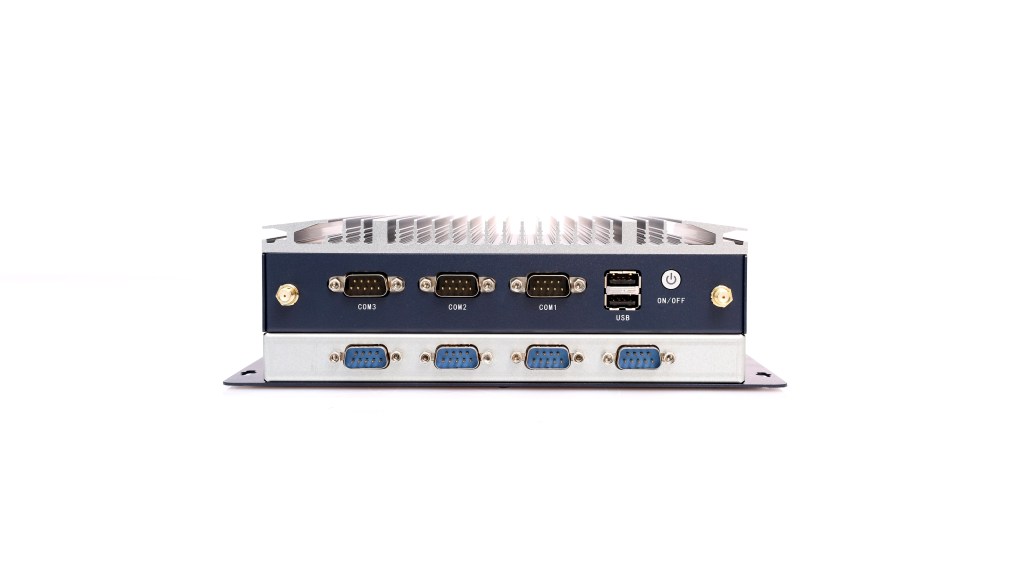
Ten USB ports, on the connectors you already have cables for
The EPC-202B provides 6× USB 2.0 and 4× USB 3.0 — ten ports, all Type-A. Peripheral-heavy stations run out of USB long before they run out of processor: two or three cameras, a barcode scanner, a label printer, a weighing indicator, a license dongle, a service keyboard. Ten ports means the powered hub that normally sits taped inside the cabinet is not needed, and there is no hub to fail or to re-enumerate after a power cut.
- 6× USB 2.0 + 4× USB 3.0 — ten Type-A ports
- No powered hub inside the cabinet
- USB 3.0 pair reserved for cameras or fast storage
- Type-A throughout, so existing cables and adapters fit
- Service keyboard and dongle can stay permanently connected
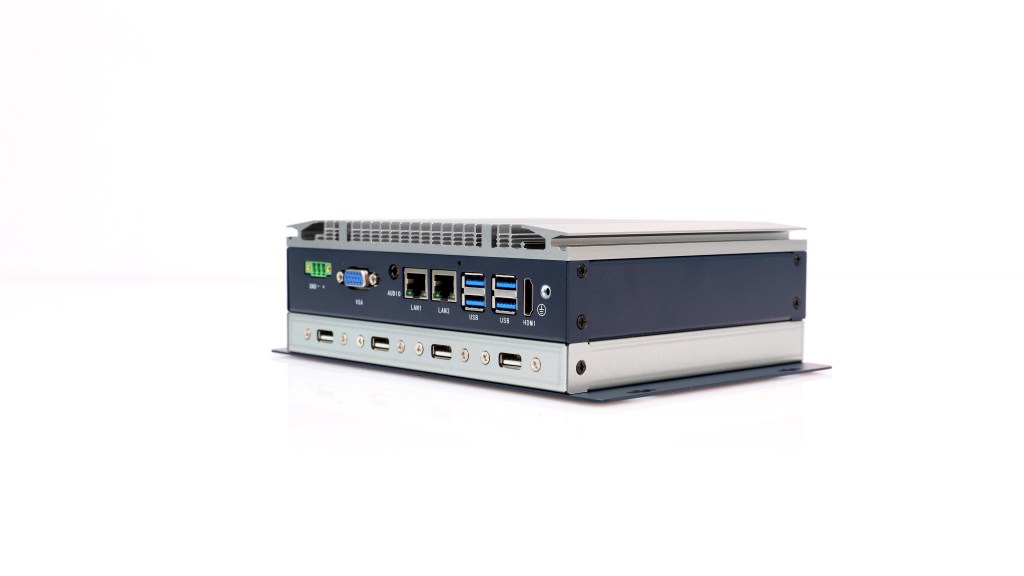
Seven serial ports, and three of them are RS485
Serial is where box PCs usually come up short. The EPC-202B carries 4× RS232 and 3× RS485 on DB9 — seven channels, and the RS485 trio is what lets a single port drive a multi-drop bus of meters, inverters or sensors rather than one device per port. Because both electrical standards are on the same unit, a cabinet that mixes RS232 instruments with an RS485 bus needs no external converter.
- 4× RS232 + 3× RS485 — seven serial channels
- 3× RS485 for multi-drop field buses
- Standard DB9 sockets — no special cable harness
- Mixed RS232 / RS485 devices on one unit
- Two Intel I210 Gigabit LAN ports for the plant network
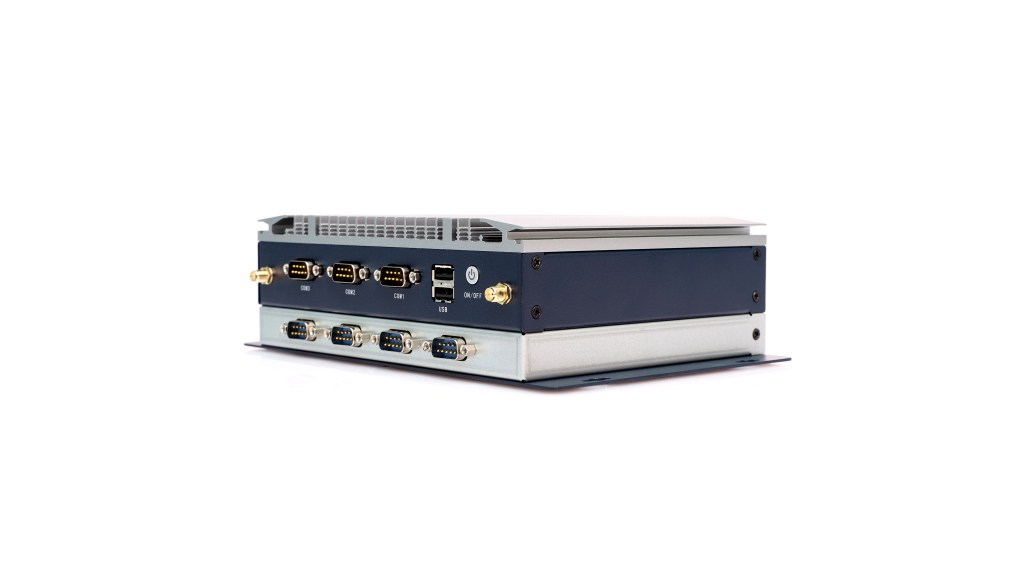
3.7 kg because the ports need the terminals
The EPC-202B shares its 337 × 160 × 47.5 mm footprint with the rest of the family but weighs 3.7 kg rather than 2.3 kg — the difference is the ten USB sockets and seven DB9 shells, and the termination behind them. That weight is the reason the connectors are on the chassis rather than on an external breakout, and it is why the unit still mounts on a wall bracket or a VESA plate without an adapter. It is fanless, from high-strength aluminium alloy, and runs the 12th Gen i3-1215U with 4–32GB DDR5.
- 3.7 kg — port count, not padding
- 337 × 160 × 47.5 mm, same footprint as the rest of the family
- 4–32GB DDR5 with an mSATA SSD
- Three standard builds: i3-1215U / i5-1235U / i7-1255U
- Wall mount and VESA mount, fanless, CE / FCC / BIS
Configurations
Choose the EPC-202B configuration
Three factory builds on one chassis. The ten USB ports, the seven serial ports, the enclosure and the mounting — 10× USB Type-A (6× USB 2.0 + 4× USB 3.0) · 4× RS232 + 3× RS485 on DB9 — 7 serial ports · HDMI + VGA · audio · 2× Intel I210 Gigabit LAN — are identical across all three, and standard memory is 8GB in every build; only the processor changes.
Intel® Core™ i3-1215U
Entry · Core i3
Best forTest benches that need the ten USB sockets and seven serial ports but only light software on top of them.
Part number C10.03.04.001 — standard build: 8GB memory, mSATA SSD 256GB.
System core
| Processor | Intel® Core™ i3-1215U |
| Memory | 8GB (4–32GB DDR5) |
| Storage | mSATA SSD 256GB |
| Storage slots | 1× mSATA SSD |
| Cooling | Fanless |
| Operating system | Windows 10 / 11 · Linux Ubuntu |
Ports & interfaces
| USB 2.0 | 6× USB 2.0 |
| USB 3.0 | 4× USB 3.0 |
| USB total | 10× USB Type-A |
| COM | 4× RS232 + 3× RS485 (DB9) |
| Serial total | 7 serial ports |
| Display | 1× HDMI + 1× VGA (dual display) |
| Audio | 1× audio |
| Ethernet | 2× 10/100/1000M Intel I210 Gigabit LAN |
Wireless & expansion
| Wireless network | 4G full network compatibility (optional) |
| Wi-Fi | Wi-Fi / Bluetooth |
Power
| DC input | 1× 3-pin pluggable terminal block, 12V DC (9–36V optional) |
| Booting | AT / ATX |
Environmental
| Operating temperature | 0–50 ℃ (−40–70 ℃ optional) |
| Storage temperature | −10–60 ℃ |
| Humidity | 10%–90%, non-condensing |
Mechanical
| Dimension | 337 (W) × 160 (D) × 47.5 (H) mm |
| Weight | 3.7 KG |
| Material | High-strength aluminium alloy |
| Mounting | Wall mount / VESA mount |
Compliance & ODM
| Certifications | CE / FCC / BIS, according to EN 55032 & EN 55035 |
| ODM | BIOS / Boot on LOGO / OEM |
Intel® Core™ i5-1235U
Balanced · Core i5
Best forPackaging and labelling lines with scanners, printers and weighing terminals on USB and instruments on the serial ports.
Part number C10.03.04.002 — standard build: 8GB memory, mSATA SSD 256GB.
System core
| Processor | Intel® Core™ i5-1235U |
| Memory | 8GB (4–32GB DDR5) |
| Storage | mSATA SSD 256GB |
| Storage slots | 1× mSATA SSD |
| Cooling | Fanless |
| Operating system | Windows 10 / 11 · Linux Ubuntu |
Ports & interfaces
| USB 2.0 | 6× USB 2.0 |
| USB 3.0 | 4× USB 3.0 |
| USB total | 10× USB Type-A |
| COM | 4× RS232 + 3× RS485 (DB9) |
| Serial total | 7 serial ports |
| Display | 1× HDMI + 1× VGA (dual display) |
| Audio | 1× audio |
| Ethernet | 2× 10/100/1000M Intel I210 Gigabit LAN |
Wireless & expansion
| Wireless network | 4G full network compatibility (optional) |
| Wi-Fi | Wi-Fi / Bluetooth |
Power
| DC input | 1× 3-pin pluggable terminal block, 12V DC (9–36V optional) |
| Booting | AT / ATX |
Environmental
| Operating temperature | 0–50 ℃ (−40–70 ℃ optional) |
| Storage temperature | −10–60 ℃ |
| Humidity | 10%–90%, non-condensing |
Mechanical
| Dimension | 337 (W) × 160 (D) × 47.5 (H) mm |
| Weight | 3.7 KG |
| Material | High-strength aluminium alloy |
| Mounting | Wall mount / VESA mount |
Compliance & ODM
| Certifications | CE / FCC / BIS, according to EN 55032 & EN 55035 |
| ODM | BIOS / Boot on LOGO / OEM |
Intel® Core™ i7-1255U
Performance · Core i7
Best forLaboratory benches running several analysers plus image capture on the same unit, where USB bandwidth and serial polling overlap.
Part number C10.03.04.004 — standard build: 8GB memory, mSATA SSD 256GB.
System core
| Processor | Intel® Core™ i7-1255U |
| Memory | 8GB (4–32GB DDR5) |
| Storage | mSATA SSD 256GB |
| Storage slots | 1× mSATA SSD |
| Cooling | Fanless |
| Operating system | Windows 10 / 11 · Linux Ubuntu |
Ports & interfaces
| USB 2.0 | 6× USB 2.0 |
| USB 3.0 | 4× USB 3.0 |
| USB total | 10× USB Type-A |
| COM | 4× RS232 + 3× RS485 (DB9) |
| Serial total | 7 serial ports |
| Display | 1× HDMI + 1× VGA (dual display) |
| Audio | 1× audio |
| Ethernet | 2× 10/100/1000M Intel I210 Gigabit LAN |
Wireless & expansion
| Wireless network | 4G full network compatibility (optional) |
| Wi-Fi | Wi-Fi / Bluetooth |
Power
| DC input | 1× 3-pin pluggable terminal block, 12V DC (9–36V optional) |
| Booting | AT / ATX |
Environmental
| Operating temperature | 0–50 ℃ (−40–70 ℃ optional) |
| Storage temperature | −10–60 ℃ |
| Humidity | 10%–90%, non-condensing |
Mechanical
| Dimension | 337 (W) × 160 (D) × 47.5 (H) mm |
| Weight | 3.7 KG |
| Material | High-strength aluminium alloy |
| Mounting | Wall mount / VESA mount |
Compliance & ODM
| Certifications | CE / FCC / BIS, according to EN 55032 & EN 55035 |
| ODM | BIOS / Boot on LOGO / OEM |
Drawings
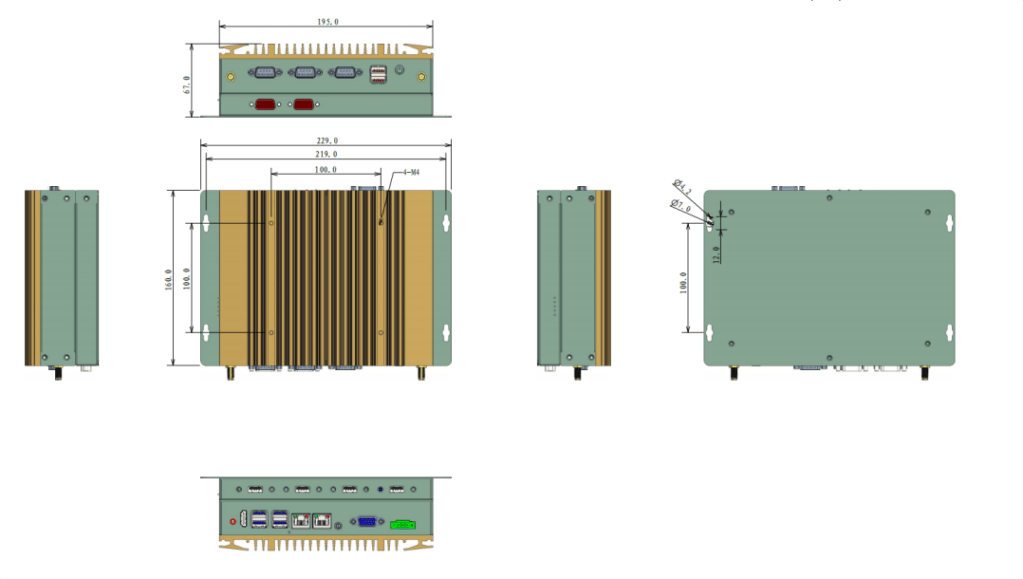
Dimensions and I/O layout
Check the depth against your cabinet before ordering — at 47.5 mm the EPC-202B fits back plates where a standard box PC will not.

Ordering information
Part numbers and standard builds
Each row is a complete factory build: the part number fixes processor, memory and storage. The enclosure, the mounting and the full I/O set — 10× USB Type-A (6× USB 2.0 + 4× USB 3.0) · 4× RS232 + 3× RS485 on DB9 — 7 serial ports · HDMI + VGA · audio · 2× Intel I210 Gigabit LAN — are the same for every row.
| NO. | Model | Product Part Number | Description | Standard Memory | Standard Storage |
|---|---|---|---|---|---|
| 1 | EPC-202B | C10.03.04.001 | Intel® Core™ i3-1215U Processor | 8GB | mSATA SSD 256GB |
| 2 | EPC-202B | C10.03.04.002 | Intel® Core™ i5-1235U Processor | 8GB | mSATA SSD 256GB |
| 3 | EPC-202B | C10.03.04.004 | Intel® Core™ i7-1255U Processor | 8GB | mSATA SSD 256GB |
Contact sales for volume pricing, memory and storage upgrades, the −40–70 ℃ extended temperature build, and 4G / Wi-Fi configuration on the same part numbers.
Downloads
EPC-202B downloads
The datasheet is available immediately. Manuals, drivers, certificates and drawings are issued with the quotation.
EPC-202B datasheet
Full specifications, I/O layout, dimensions and the ordering table (PDF).
Panel PC buying guide
How to size the display, choose the protection rating and specify the cutout.
Industrial PC FAQ
Processor, operating system, mounting and environmental questions.
Manual, drivers & certificates
User manual, driver pack, CE / FCC / BIS certificates, 2D and 3D drawings — issued per order.
FAQ
EPC-202B frequently asked questions
Questions about the ten USB sockets and their current budget, the seven serial ports and their RS485 split, the 3.7 kg chassis and the mechanical fit.
What is the EPC-202B, and what makes it different from a standard box PC?
The EPC-202B is a fanless industrial box PC built around port count: ten USB ports and seven serial ports. Standard box PCs typically give you four or six USB and one or two COM. The EPC-202B is for stations where the peripheral list keeps growing — cameras, scanners, scales, label printers and legacy controllers — and where the cabinet has no room left for powered hubs and USB-to-serial stacks.
How many USB ports does it have, and what are they for?
Ten in total: 6× USB 2.0 and 4× USB 3.0, all Type-A. The USB 3.0 ports are the ones to give to cameras or fast storage; the USB 2.0 ports suit scanners, indicators, printers and dongles. Because Type-A is used throughout, standard cables and adapters fit without conversion, and a service keyboard can stay connected permanently.
How many serial ports does it have, and how many are RS485?
Seven: 4× RS232 and 3× RS485, all on standard DB9 sockets. The three RS485 ports are the important number — RS485 is the multi-drop standard, so one port can carry a chain of meters, inverters or sensors on a single twisted pair. Three of them means three separate field buses can be driven without any external converter.
Why does it weigh more than the other 337 mm chassis?
3.7 kg against 2.3 kg for the same footprint. The difference is the ten USB sockets and seven DB9 shells plus their termination. That extra hardware is what keeps the connectors on the chassis itself instead of on an external breakout board — which matters in a cabinet where a breakout board would need its own mounting, its own cable and its own failure mode.
What is it used for in practice?
Peripheral-heavy and serial-heavy stations: test and inspection benches with cameras plus instruments, packaging and labelling lines with scanners, printers and weighing terminals, laboratory benches with analysers and meters, and retrofit cabinets where an old controller had a stack of serial devices and the replacement has to take them all on.
Which processor does it use, and how many builds are there?
The base build is an Intel® Core™ 12th Gen i3-1215U running at 1.2–4.4 GHz. Three standard factory builds are orderable — i3-1215U, i5-1235U and i7-1255U — with part numbers C10.03.04.001, C10.03.04.002 and C10.03.04.004. The ports, the chassis and the mounting are identical across all three.
How much memory and storage does the port-dense unit take?
4–32GB DDR5 with a 1× mSATA SSD. DDR5 matters here because a station running several cameras or instrument feeds is bandwidth-bound before it is compute-bound, and 32GB leaves room for image buffers and a local database alongside the application.
How is it cooled, and what environment does it hold?
It is completely fanless — no fan, no filter, and no air path drawing workshop dust or oil mist across the boards. Operating temperature is 0–50 ℃ as standard with −40–70 ℃ optional; storage is −10–60 ℃ and humidity is 10%–90% non-condensing.
What power, networking and certifications does it carry?
12V DC on a 3-pin pluggable terminal block, with 9–36V DC optional and startup switchable between AT and ATX. Networking is 2× Intel I210 Gigabit LAN plus optional 4G and Wi-Fi/Bluetooth. Certifications are CE, FCC and BIS to EN 55032 and EN 55035, with ODM support for custom BIOS, boot-on-LOGO and OEM branding. It runs Windows 10 / 11 and Linux Ubuntu.
Related models
Other models in the family
The LEGO MODE box PC family covers digital I/O and fieldbus, serial and USB, multi-LAN, cellular and power-redundant variants on one modular platform. The EPC-202B is the one built around ten USB ports and seven serial ports; if you need 8×8 digital I/O, five LAN, battery backup, redundant power or a SIM-card slot, one of its siblings carries it.
Tell us your I/O list and your cabinet space
Send us the signals you need to read and drive, the ports, the supply voltage and the space available. We will confirm the configuration, the part number, the lead time and the price — typically the same working day.
Request a quotation
Tell us what you need — we will quote the EPC-202B
Pick the specification and the application below — every answer reaches us as a separate line, so one reply can confirm the exact build, lead time and price. Not sure about a field? Leave it on “advise me” and our engineers will choose for you.

