
Who the EPC-306A configuration is for
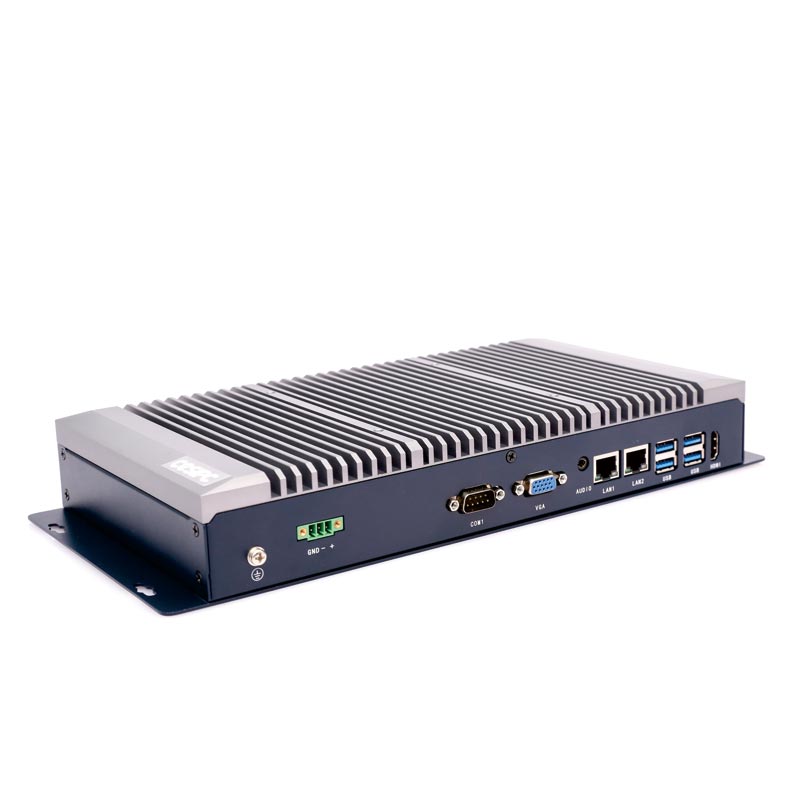
The EPC-306A is the entry configuration of CESIPC’s EPC-30XA fanless embedded industrial PC. It pairs an Intel Celeron J1900 quad-core processor (2.0–2.4 GHz, 10 W TDP) with 4 GB of DDR3L memory and a 128 GB mSATA SSD inside a 337 × 160 × 47.5 mm extruded aluminium chassis that weighs 2.11 kg.
Specify it when the box has to gather serial devices rather than compute. Six DB9 ports — four RS-232 and two RS-485 — are the reason the EPC-30XA exists: weighing indicators, barcode readers, VFDs, PLCs, temperature controllers and legacy machine interfaces can all land on one unit instead of two stacked converters.
It is the only EPC-30XA configuration with five USB 2.0 ports, against four on the EPC-307A and two on the EPC-309A and EPC-302A. A serial concentrator that also has to read USB instruments, USB-to-serial adapters and a keyboard gets there without a hub.
The Celeron J1900 is the only board in the EPC-30XA series that CESIPC lists Windows 7 support for, which matters when a machine runtime or a vendor’s configuration tool was never certified on a newer operating system. Windows 10 and Windows 11 are supported as well, along with Ubuntu 16.04 to 22.04.
Choose the EPC-206A instead if the project needs an expansion bay rather than a high serial count. Both use the same J1900 board and the same 4 GB / 128 GB build; the EPC-30XA is 337 mm wide with six DB9 ports, the EPC-20XA is 79 mm tall with three serial ports and an i-Door slot for pluggable function cards.
Choose the right EPC-30XA configuration
All four configurations share the same 337 × 160 × 47.5 mm extruded aluminium chassis, the same mounting bracket and VESA pattern, the same 327 × 100 mm installation footprint, the same 6× DB9 serial (RS-232 ×4 + RS-485 ×2) and the same 2× Intel I210 Gigabit LAN. Only the compute board, memory, storage, USB mix and integrated graphics change.
| EPC-306Acurrent | EPC-307A | EPC-309A | EPC-302A | |
|---|---|---|---|---|
| Processor | Intel Celeron J1900, 4 cores, 2.0–2.4 GHz, 10 W | Intel Celeron J6412, 4 cores, 2.0–2.6 GHz, 10 W | Intel Core i3-10110U / i5-10210U / i7-10510U, 15 W | Intel Core i3-1215U / i5-1235U / i7-1250U |
| Memory | DDR3L 4–8 GB | DDR4 4–16 GB | DDR4 4–32 GB | DDR5 8–32 GB |
| Standard memory | 4 GB DDR3L (8 GB max) | 8 GB DDR4 (16 GB max) | 8 GB DDR4 (32 GB max) | 8 GB DDR5 (32 GB max) |
| Standard storage | 1× mSATA SSD, 128 GB standard | 1× mSATA SSD, 128 GB standard | 1× mSATA + 1× M.2 SSD, 128 GB standard | 2× M.2 SSD, 256 GB standard |
| USB ports | 5 × USB 2.0 + 1 × USB 3.0 | 4 × USB 2.0 + 2 × USB 3.0 | 2 × USB 2.0 + 4 × USB 3.0 | 2 × USB 2.0 + 4 × USB 3.0 |
| Graphics | Intel HD | Intel UHD | Intel UHD | Intel UHD (i3-1215U) / Iris Xe (i5, i7) |
| Windows 7 support | Yes | Not listed | Not listed | Not listed |
| Best for | Lowest-cost serial concentrators with six DB9 ports and several USB 2.0 devices | Newer Celeron board with six serial ports and more memory headroom | Six-port serial concentrators that also run databases or several SCADA clients | Six serial ports plus GPU-accelerated vision or edge inference |


HIGHLIGHTS:
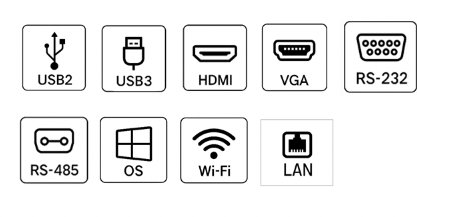
- Intel® Celeron J1900 quad-core, 2.0–2.4 GHz, 10 W, 2 MB cache
- 4 GB DDR3L (8 GB maximum) · 1× mSATA SSD, 128 GB standard
- 6× DB9 serial: RS-232 ×4, RS-485 ×2
- 0°C to 50°C (-40°C to 70°C optional)
- Dual Intel® I210 Gigabit LAN
- 6× USB: USB 2.0 ×5, USB 3.0 ×1
- HDMI + VGA dual display, 3.5 mm audio
- 12V DC standard, 9–36V DC optional
- TPM 2.0, SafeCore™ power-loss protection
- OS: Windows 7, Windows 10/11, Ubuntu 16.04–22.04
- Fanless design, CESIPC BlockCore architecture
- 6063 high-strength aluminium chassis, 2.11 kg
- Bracket mount + VESA mount, 327 × 100 mm installation
- 60,000-hour MTBF, CE / FCC
- 24/7 non-stop operation
TARGET APPLICATIONS:
Designed for demanding industrial environments where reliability, compact footprint, and flexible connectivity are non-negotiable.

CNC / Motion Control, Machine Vision, Factory Automation, Semiconductor, AGV / Robotics, Energy Monitoring, Digital Signage, Edge AI Inference
CESIPC ADVANTAGE:
16-year manufacturing heritage with in-house sheet-metal and SMT production lines, ensuring quality consistency from prototype to mass production.

ODM services available: BIOS customization, boot logo, OEM labeling, and full white-label support.
FAQ
Answers for the EPC-306A build. Platform-wide questions — chassis, protection, mounting and the upgrade path — are answered on the EPC-30XA overview page.
What CPU, memory and storage does the EPC-306A ship with?
The EPC-306A ships with an Intel Celeron J1900 quad-core processor at 2.0–2.4 GHz with 2 MB of cache and a 10 W TDP, 4 GB of DDR3L memory expandable to 8 GB, and a 128 GB mSATA SSD. Integrated Intel HD graphics drive the HDMI and VGA outputs. Different memory and SSD sizes are built to order.
How are the six serial ports on the EPC-306A configured?
Six DB9 ports: four RS-232 and two RS-485. The RS-485 pair suits multi-drop buses such as Modbus RTU, while the four RS-232 ports cover point-to-point devices — weighing indicators, barcode scanners, temperature controllers and legacy PLC programming ports. All six are brought out on one side of the chassis so the cabinet can be wired from a single cable duct.
Does the EPC-306A support Windows 7?
Yes, and it is the only configuration in the EPC-30XA series that does, because CESIPC lists Windows 7 support for the Celeron J1900 board only. Windows 10, Windows 11 and Ubuntu 16.04, 18.04, 20.04 and 22.04 are supported as well, which makes the EPC-306A the pick when a legacy serial tool or machine runtime requires Windows 7.
How is the EPC-306A different from the EPC-206A?
Both run the same Celeron J1900 board with 4 GB of DDR3L and a 128 GB SSD. The EPC-306A is the 337 × 160 × 47.5 mm chassis with six DB9 serial ports and no expansion slot; the EPC-206A is the 229 × 160 × 79 mm chassis with three serial ports and an i-Door bay for pluggable CAN bus, LAN, serial or 5G cards. Choose by whether the project needs serial count or expansion.
Contact Us
Talk to a CESIPC Engineer
Our application engineers are ready to help you select the right configuration, discuss ODM requirements, or provide a tailored quotation for your project.
Typical response within 24 hours · Multilingual support · CE / FCC / BIS compliant