
This podcast explores a real-world application of an EPC-302A industrial PC for lithium battery energy storage cabinet control. For this project, CESIPC customized the system with 4× RS-485 interfaces, surge protection, 8×8 GPIO, and a relay module for switching loads up to 3A. The case shows why industrial PC selection should consider I/O, communication, protection, and control requirements—not only CPU performance.
Listen to the episode to learn how the EPC-302A was adapted to the communication and control requirements of an energy storage cabinet.
In This Episode
- Why I/O requirements mattered more than CPU performance in this project
- Why the energy storage cabinet required 4× RS-485
- How surge protection was added to the communication interfaces
- How GPIO was used for digital signal control
- Why a relay was required for loads up to 3A
- How an EPC-302A was customized for the cabinet control architecture
Key Takeaways
1. Industrial PC selection starts with the I/O architecture
The project was driven by communication and control requirements rather than CPU performance alone.
2. RS-485 and GPIO serve different functions
RS-485 provides communication with industrial devices, while GPIO provides direct digital input and output for control signals.
3. The relay handles the higher-current switching path
The GPIO provides the relay control signal, while the relay contacts handle the switching path for loads up to 3A.
4. Industrial interfaces may require electrical protection
Surge protection was added to the RS-485 interfaces according to the project requirements.
5. A standard industrial PC can be customized around the application
The EPC-302A served as the base platform, while its I/O configuration was adapted to the actual energy storage cabinet requirements.
Project Snapshot
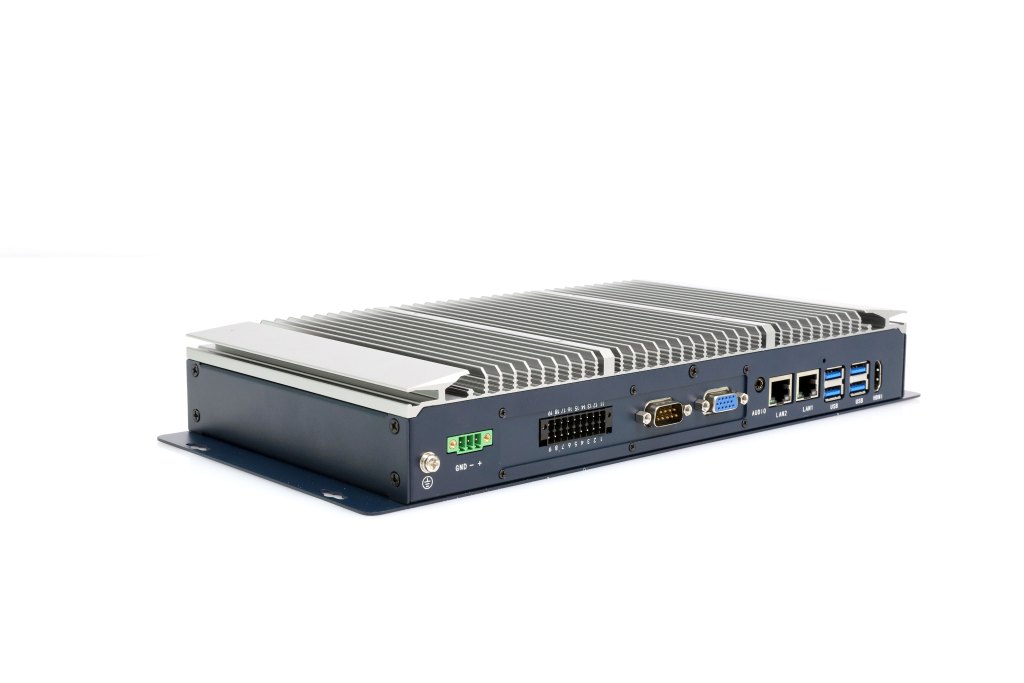
| Item | Details |
|---|---|
| Application | Lithium battery energy storage cabinet |
| Customer | Lanhai Energy |
| Industrial PC | CESIPC EPC-302A |
| RS-485 | 4× |
| RS-485 Protection | Surge protection |
| GPIO | 8× digital input + 8× digital output |
| Relay | Integrated relay module |
| Switching Capability | Up to 3A |
| Power Input | 9–36V DC |
| Cooling | Fanless |
| Customization | Application-specific I/O configuration |
Pip: Industrial PCs: the computers nobody photographs for a lifestyle blog, but that quietly keep the lights on — sometimes literally, inside a lithium battery cabinet.
Mara: That’s exactly the territory today. CESIPC-Summer walks us through a real deployment where the hardware had to be engineered around a specific control architecture, not just dropped in off the shelf.
Pip: Right — the I/O requirements drove everything. Let’s start with what that actually looked like on the ground.
GPIO, Relays, and the Energy Storage Cabinet
Mara: The question this post opens with is worth sitting with: when an industrial PC goes inside an energy storage cabinet, what does it actually need to do beyond running software?
Pip: The post answers that directly. Here’s the line that frames the whole project: “This case shows how an industrial PC can be adapted to the actual I/O and control architecture of an energy storage cabinet, rather than being selected based on CPU performance alone.”
Mara: So the upshot is that processor specs were almost beside the point. The customer, Lanhai Energy, needed four RS-485 interfaces, surge protection on each of them, GPIO for digital signal handling, and a relay capable of switching loads up to 3A. That’s the checklist the hardware had to answer.
Pip: And the standard EPC-302A ships with RS-232, not RS-485 — so none of that was off the shelf.
Mara: Correct. CESIPC customized the platform specifically for this deployment. The RS-485 ports replace the standard RS-232 configuration, and the surge protection was added to address the electrical environment inside the cabinet — not treated as an optional extra.
Pip: Four independent channels is also doing real work here. It’s not just “more ports” — it’s the communication capacity the cabinet’s architecture actually required.
Mara: The GPIO side is worth unpacking too. The standard EPC-302A provides 8 digital inputs and 8 digital outputs, with configurable 24V, 12V, and 5V levels and MODBUS compatibility. That’s the platform the relay control runs through.
Pip: Which raises the obvious question — why not just use the GPIO output directly to switch the load?
Mara: Because the load required up to 3A, which is beyond what a GPIO output handles directly. The post is careful about this: the GPIO provides the control signal, the relay contacts handle the switching path. The chain is industrial PC, then GPIO, then relay, then external load.
Pip: So the relay isn’t amplifying the GPIO — it’s a separate switching path that the GPIO triggers. That distinction matters when you’re designing the system.
Mara: Exactly. And the post makes the broader point that for BESS integrators, this is the right order of operations: define the I/O and control architecture first, then select the processor and memory.
Pip: Start with the wiring diagram, not the benchmark scores. Sensible advice that somehow still needs saying.
Mara: The modular architecture CESIPC calls BlockCore supports this — RS-232, RS-485, DI, DO, USB, LAN, and other options can be configured around what the application actually needs, rather than forcing the system to fit a fixed product spec.
Pip: The through-line here is that the right industrial PC is the one whose I/O matches the system, not the one with the fastest chip.
Mara: Define the architecture first. The hardware follows. Worth keeping in mind next time we’re looking at a deployment case.
Need an industrial PC with GPIO, RS-485, relay output, or customized I/O for an energy storage system? Contact CESIPC to discuss your application requirements.


We use your details only to answer this enquiry — no newsletters, no sharing. Drawings or a photo of the existing panel can be sent to sales@cesipc.com.