
Pip: Fuel stations have gone from pumping gas to running what amounts to a distributed sensor network — and someone has to hold all of that together.
Mara: That’s exactly the territory CESIPC-Summer covers here — how industrial edge gateways are becoming the connective tissue for smart fuel station infrastructure, and what the hardware actually has to do to earn that role.
Pip: Let’s start with why the integration problem is harder than it looks.
Why Smart Fuel Stations Need an Edge Gateway
Mara: The core tension in modern fuel station automation is device diversity — dispensers, tank gauges, environmental sensors, payment terminals, and management software all running simultaneously, many of them speaking completely different protocols.
Pip: The post frames this directly: “Without a dedicated industrial gateway, project teams may rely on multiple converters, routers, and small controllers, increasing system complexity and maintenance costs.”
Mara: So the upshot is that complexity isn’t just an engineering headache — it compounds into ongoing maintenance costs across the project lifecycle. A single integration platform reduces the number of failure points and the number of vendor relationships a team has to manage.
Pip: And the gateway isn’t just a passive bridge. It handles protocol conversion between legacy serial interfaces and modern Ethernet equipment, runs local edge computing tasks like alarm management and data buffering, and maintains network isolation between operational and management traffic. That last one matters — a fuel station’s operational network probably shouldn’t be on the same segment as its office Wi-Fi.
Mara: The post also makes a point worth sitting with on the hardware side. Fuel stations run continuously, and the environment is genuinely harsh — dust, temperature swings, power instability. Commercial PCs deployed in those conditions tend toward overheating and interface shortages.
Pip: Which is where the EPC-309A enters the picture — fanless cooling, wide voltage input, multiple serial ports for legacy equipment, dual Gigabit LAN for network segmentation, all in a cabinet-ready form factor built for 24/7 operation.
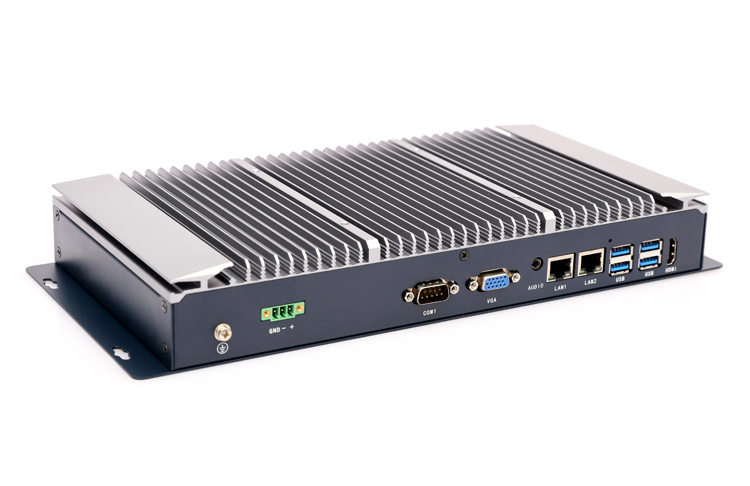
Mara: The post’s conclusion puts it plainly: selecting the right industrial gateway platform is “a critical step toward ensuring long-term system stability and project success.” The hardware choice is really a commitment about how maintainable the whole system will be years down the line.
Pip: Reliability at the edge isn’t a feature — it’s the prerequisite for everything else the station wants to do digitally.
Mara: The through-line here is that edge infrastructure is what makes digital transformation at a fuel station actually durable, not just demonstrable.
Pip: Next time, we’ll see what other industrial environments are making the same bet on edge computing as their foundation.
Talk to a CESIPC Engineer
Our application engineers are ready to help you select the right configuration, discuss ODM requirements, or provide a tailored quotation for your project.
Typical response within 24 hours · Multilingual support · CE / FCC / BIS compliant


We use your details only to answer this enquiry — no newsletters, no sharing. Drawings or a photo of the existing panel can be sent to sales@cesipc.com.