
Why More Smart Fuel Station Projects Are Using Industrial Edge Gateways: A Look at the CESIPC EPC-309A
As fuel stations become increasingly digital, system integrators face a growing challenge: connecting multiple devices from different manufacturers into one stable and manageable network.
A modern fuel station may include fuel dispensers, automatic tank gauging (ATG) systems, environmental monitoring equipment, CCTV systems, payment terminals, and station management software. While each system serves a different purpose, they all generate valuable operational data that must be collected, processed, and transmitted reliably.
This is why more fuel station projects are adopting industrial edge gateways as the foundation of their smart infrastructure.
The Data Integration Challenge in Modern Fuel Stations
One of the biggest challenges in fuel station automation is device diversity.
Many field devices still communicate through RS232 or RS485 serial interfaces, while newer equipment uses Ethernet networks. Integrating these systems often requires protocol conversion, data aggregation, and continuous communication with cloud or management platforms.
Without a dedicated industrial gateway, project teams may rely on multiple converters, routers, and small controllers, increasing system complexity and maintenance costs.
An industrial edge gateway simplifies this architecture by providing a central platform for data collection and communication.
What Does an Industrial Edge Gateway Do?
In a fuel station environment, an industrial edge gateway typically performs several key functions:
Data Collection
The gateway connects to field devices such as:
- Fuel dispensers
- Tank gauging systems
- Environmental sensors
- Alarm systems
- Energy monitoring equipment
Through serial and Ethernet interfaces, data from different devices can be collected into a single platform.
Protocol Conversion
Different manufacturers often use different communication protocols.
The gateway acts as a bridge between field devices and upper-level software systems, reducing software integration complexity and shortening deployment time.
Edge Computing
Not all data needs to be sent directly to the cloud.
Industrial gateways can process certain tasks locally, including:
- Alarm management
- Data buffering
- Device status monitoring
- Network outage recovery
This improves system responsiveness while reducing network dependency.
Secure Network Management
Fuel stations often require separation between operational networks and management networks.
Multi-LAN industrial computers allow system integrators to implement network isolation, improving both security and maintainability.
Why Industrial Hardware Matters
Fuel stations operate continuously, often 24 hours a day, 7 days a week.
Unlike office environments, equipment may be exposed to:
- Dust
- Temperature fluctuations
- Power instability
- Long operating hours
Using commercial PCs for field deployment can lead to issues such as overheating, hardware failures, insufficient interfaces, and inconsistent long-term availability.
Industrial-grade hardware is designed specifically for these conditions, helping reduce downtime and maintenance costs throughout the project lifecycle.
A Look at the CESIPC EPC-309A
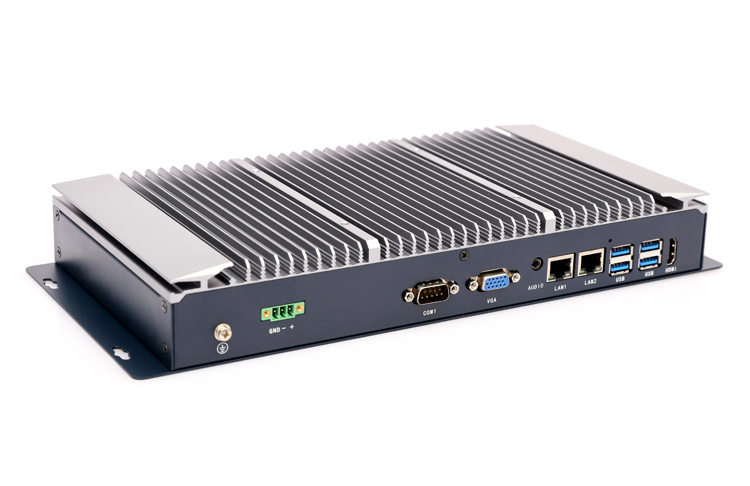
For fuel station automation projects, the CESIPC EPC-309A provides a practical platform for industrial edge gateway applications.
Designed as a fanless embedded industrial computer, the EPC-309A combines reliability, connectivity, and flexibility in a compact form factor.
View product details: CESIPC EPC-30XA Industrial PC
Key advantages include:
- Multiple serial ports for connecting legacy fuel station equipment
- Dual Gigabit LAN ports for network segmentation
- Wide voltage input for industrial environments
- Fanless cooling design for long-term stability
- Compact embedded structure for cabinet installation
- Industrial-grade components for 24/7 operation
These features make the EPC-309A suitable for applications such as:
- Fuel dispenser communication
- Automatic tank gauging (ATG) integration
- Environmental monitoring systems
- Energy management platforms
- Fuel station IoT gateways
- Service area automation projects
Instead of deploying multiple communication devices, system integrators can use a single industrial computing platform to handle data acquisition, protocol conversion, local processing, and network communication.
Looking Ahead
As fuel stations continue evolving into connected energy service hubs, reliable edge computing infrastructure is becoming increasingly important.
The ability to collect, process, and manage data at the edge helps operators improve visibility, reduce maintenance costs, and support future digital transformation initiatives.
For system integrators, selecting the right industrial gateway platform is no longer just a hardware decision. It is a critical step toward ensuring long-term system stability and project success.
Conclusion
Smart fuel stations depend on reliable communication between equipment, software platforms, and cloud services.
Industrial edge gateways provide the foundation for this connectivity by simplifying data integration, supporting edge computing, and improving system reliability.
With its fanless design, industrial-grade reliability, multiple communication interfaces, and flexible deployment options, the CESIPC EPC-309A is well positioned to serve as an industrial edge gateway platform for fuel station automation and energy management projects.
Talk to a CESIPC Engineer
Our application engineers are ready to help you select the right configuration, discuss ODM requirements, or provide a tailored quotation for your project.
Typical response within 24 hours · Multilingual support · CE / FCC / BIS compliant


We use your details only to answer this enquiry — no newsletters, no sharing. Drawings or a photo of the existing panel can be sent to sales@cesipc.com.