
RFID Panel PC
Pip: Factory floors have always had a trust problem — not the human kind, just the “which of these five separate boxes handles authentication today” kind. CESIPC has been thinking about that, and the answer turns out to be: fewer boxes.
Mara: This episode covers one core territory — why integrated RFID industrial panel PCs are replacing fragmented authentication setups in smart factories, and what that shift means for deployment, reliability, and MES connectivity. Let’s start with the case against the old way.
Built-in RFID: Rethinking Factory Authentication
Pip: The central tension here is straightforward: factories need secure operator authentication, but the traditional approach stacks up external RFID readers, separate industrial PCs, independent displays, and extra wiring — and every joint in that chain is a potential failure point.
Mara: The post puts it plainly: “Complex systems increase downtime and maintenance costs.” That’s the diagnostic. When something breaks, you’re not troubleshooting one device — you’re asking whether the fault sits in the reader, the PC, the display controller, the serial link, or the power module.
Pip: So the stakes are real: in a 24/7 production environment, an authentication failure doesn’t just lock someone out — it stalls a production workflow, and tracing the cause through a fragmented stack burns time the floor doesn’t have.
Mara: The integrated answer is a single terminal — RFID authentication, fanless industrial computing, and a ten-inch touchscreen in one unit. The post walks through what that consolidation actually removes: installation labor, cabling runs, failure points, and the commercial-grade hardware that was never rated for factory EMI, dust, or wide voltage swings in the first place.


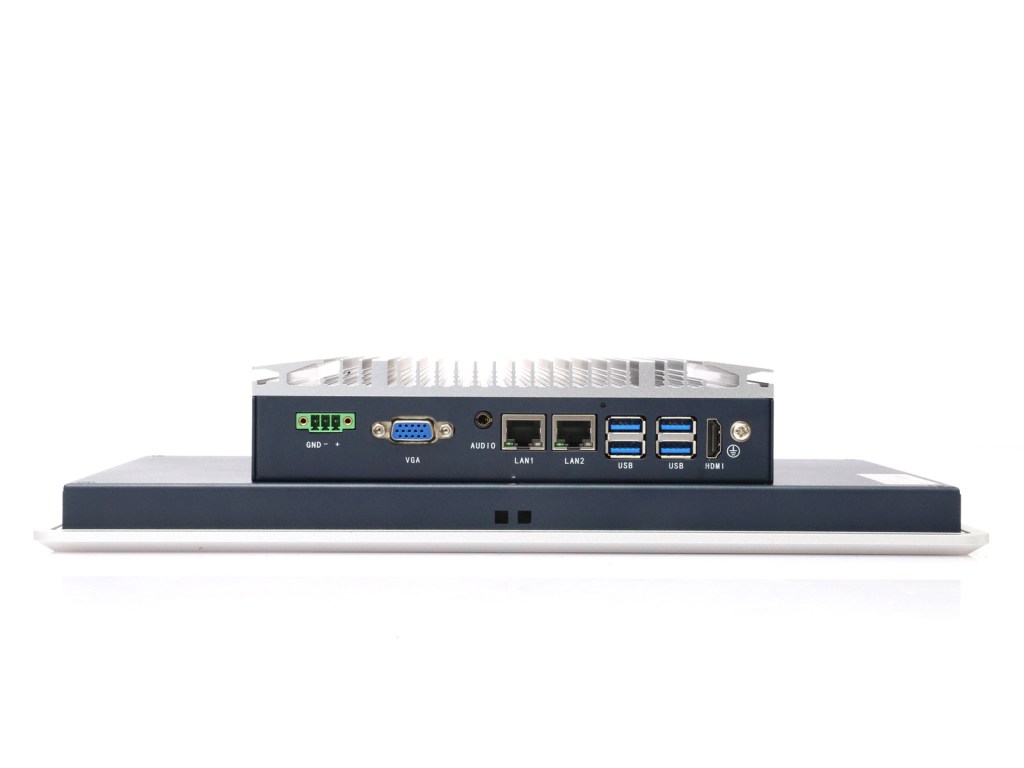
Pip: Fanless thermal design is the quiet hero of that list — no moving parts means no fan failures in a dusty environment, which is exactly the kind of reliability problem that looks minor until it isn’t.
Mara: On the MES side, the post is specific about what RFID login enables: operators authenticate with a card, load role-specific permissions, and every action ties back to a named operator in the manufacturing execution system. Production traceability depends on that link being clean and unbroken.
Pip: The post also maps real deployment contexts — production line login stations, cleanroom and lab access control, warehouse authentication terminals, equipment authorization locks. Each one is a place where a fragmented setup was doing the job badly.
Mara: The connectivity picture supports all of those: multiple COM ports for PLC communication, dual Gigabit LAN for network segmentation, USB, HDMI, and VGA. The point is that integration doesn’t mean isolation — it means one device that speaks the factory’s existing language.
Pip: Which brings the argument full circle — Industry 4.0 doesn’t just want smarter devices, it wants fewer seams between them.
Mara: The throughline is consolidation as a reliability strategy — fewer components, fewer failure modes, cleaner data back to the MES.
Pip: Turns out the smartest thing a smart factory can do is stop asking five devices to do one job. More on where that principle leads next time.
Contact CESIPC Team
Our application engineers are ready to help you select the right configuration, discuss ODM requirements, or provide a tailored quotation for your project.

Typical response within 24 hours · Multilingual support · CE / FCC / BIS compliant

