
Pip: If your factory’s login process involves a USB cable, a prayer, and three minutes of driver troubleshooting, CESIPC-Summer has some thoughts.
Mara: This episode covers one territory: how integrating RFID directly into a panel PC changes what traceability actually looks like on the factory floor. Let’s start with the case for built-in RFID workstations and what that means for MES deployments.
MES RFID Panel PC: Built-In RFID and What It Changes
Pip: The core question here is whether it matters how the RFID reader connects to the workstation — built in versus bolted on — and the answer turns out to matter quite a bit once you’re running multiple shifts across dozens of stations.
Mara: The post frames it directly: “Unlike traditional workstation setups that use an external RFID reader connected to a computer through USB or serial ports, an RFID Panel PC integrates the RFID reader directly into the industrial touchscreen terminal.”
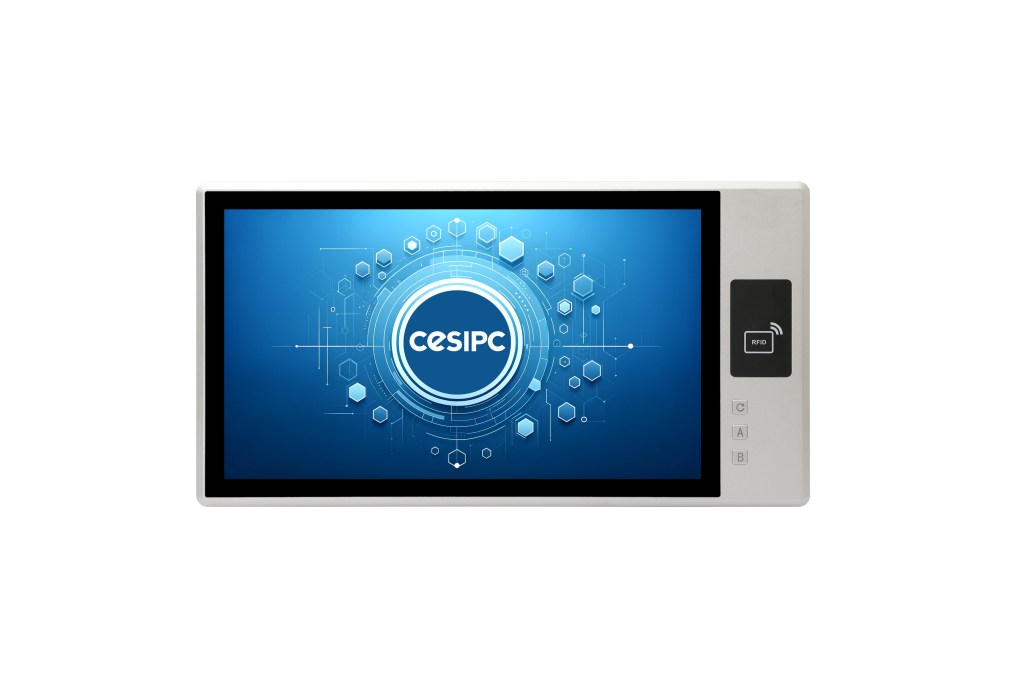
Pip: So the upshot is that every cable, connector, and driver you remove is one less thing that can fail mid-shift and strand an operator outside the MES system entirely.
Mara: The post lists the failure modes explicitly — loose USB connections, damaged cables, driver conflicts, reader communication failures, accidental disconnection during maintenance. Any one of those stops an operator from logging in, and across multiple shifts that accumulates into real production losses.
Pip: The operator experience argument is the one I find most concrete. Gloves, fast movement, shared accounts — typing credentials repeatedly is a genuine friction cost, not a minor inconvenience.
Mara: Right, and the post makes that precise: tap card, login instantly, start work, measured in seconds rather than minutes. At scale, across a high-volume production year, those seconds compound.
Mara: Traceability is where the integration argument gets its sharpest edge. The post describes automatically associating operator identity, work order, material batch, production timestamp, and machine information into a single digital production record — which is exactly what industries like automotive, electronics, and medical devices are being required to produce.
Pip: And security closes the loop. Shared MES accounts are apparently still common, which means production activities can’t always be tied to the person who actually performed them. RFID authentication paired with TPM 2.0 changes the accountability picture.
Mara: The hardware spec the post anchors to — the UTC-W2172C — is built around that environment: fanless cooling, IP65 front panel, aluminum housing, wide-voltage input, dual LAN, six COM ports. The integration argument only holds if the underlying platform can handle continuous factory conditions.
Pip: Fewer components, harder shell, faster login — the case for integrated RFID is really just the case for removing the parts most likely to fail first.
Mara: The through-line here is that traceability isn’t a reporting feature — it’s an architecture decision made at the workstation level.
Pip: Build it in or bolt it on. Turns out that choice shows up in your downtime logs either way.
Talk to a CESIPC Engineer
Our application engineers are ready to help you select the right configuration, discuss ODM requirements, or provide a tailored quotation for your project.
Typical response within 24 hours · Multilingual support · CE / FCC / BIS compliant

