
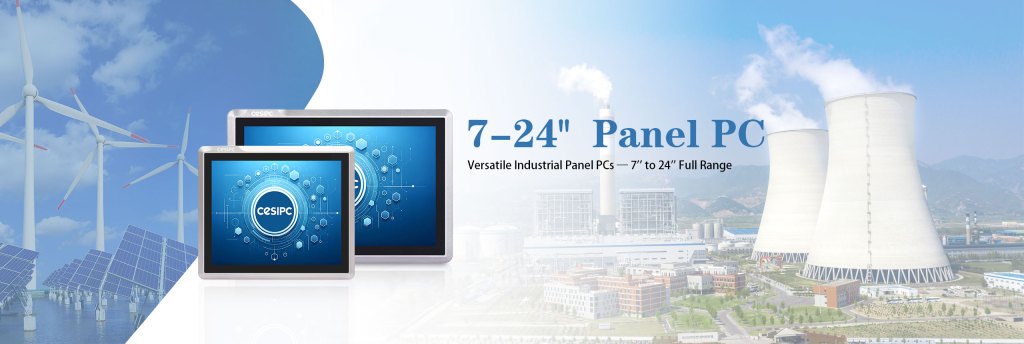
Panel PC | Industrial Panel-PC | Touch Panel PCs | Industrial-PC with touch screen | Multi-Touch Panel PCs
To choose the right industrial panel PC, start by defining the application, installation environment and required system performance. The key selection factors include display size and resolution, processor performance, cooling method, mounting type, IP protection, operating temperature and industrial I/O requirements. A suitable panel PC should match the application’s actual workload and environmental conditions rather than simply using the highest-performance configuration.
Rugged & Dependable Industrial Panel PC with touch screen – for control cabinet installation, swivel arm mount and flush mount.
Panel PC or HMI (Human Machine Interface) refers to a specialized category of industrial PC in which the computing unit and display are integrated into a single enclosure. Typical Panel PC applications include production and process automation, machine control, as well as use as a display and operating terminal. Compared with a conventional industrial PC combined with a separate touch display, Touch Panel PCs offer key advantages such as reduced cabling and assembly effort, a more compact footprint, and often lower total system costs.
The CESIPC Industrial Panel PCs stand for highly durable and highly reliable systems, offering an excellent value for money ratio. From the early design phase through component selection, the focus is placed on stable 24×7 operation, even under harsh industrial conditions. Only proven industrial components with high-quality elements are used. After assembly, each Panel PC undergoes a thorough quality check as well as a comprehensive burn-in stress test to ensure dependable long-term performance.
There are various types of Industrial Panel PCs, commonly distinguished by performance, screen size, mounting options, and design. In addition, dedicated Panel PC versions are available for outdoor use, use in vehicles (such as forklifts), agricultural vehicles, or use in hazardous areas. All CESIPC Panel PCs are protected against dust and splash water, providing at least IP65 protection on the front side. A large part of the product portfolio even complies with IP65 protection from all sides, making these Panel PCs well-suited for operation under extreme environmental conditions.
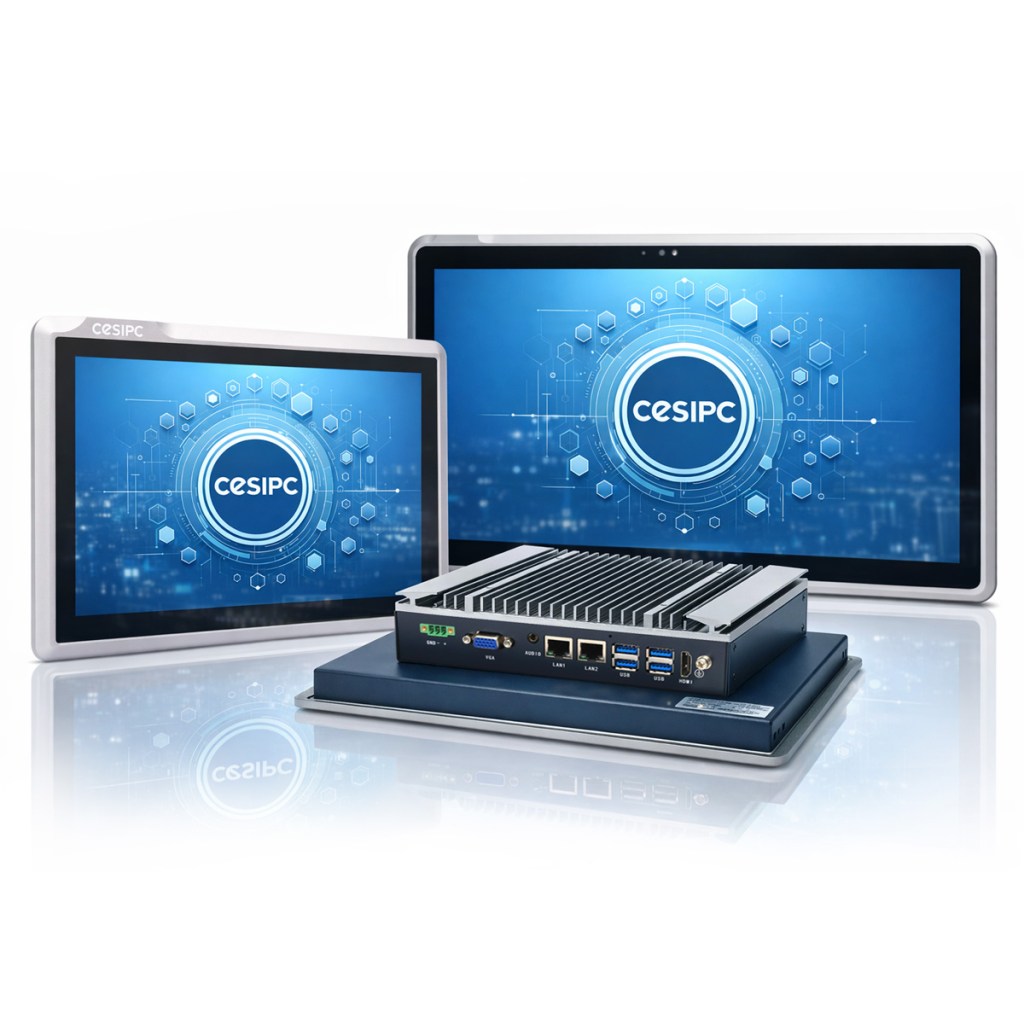
CESIPC LEGO Panel PC- the right solution for every application

- Front side IP65
- Display sizes from 7″ to 23.8
- Intel Core i5-1235U 12th Gen.
- Die-cast aluminum housing
- Completely fanless
- Windows11/10/7

- RFID reader
- Front side IP65
- Display sizes 15″
- Intel Core i5-1235U 12th Gen.
- Die-cast aluminum housing
- Completely fanless
- Windows11/10/7
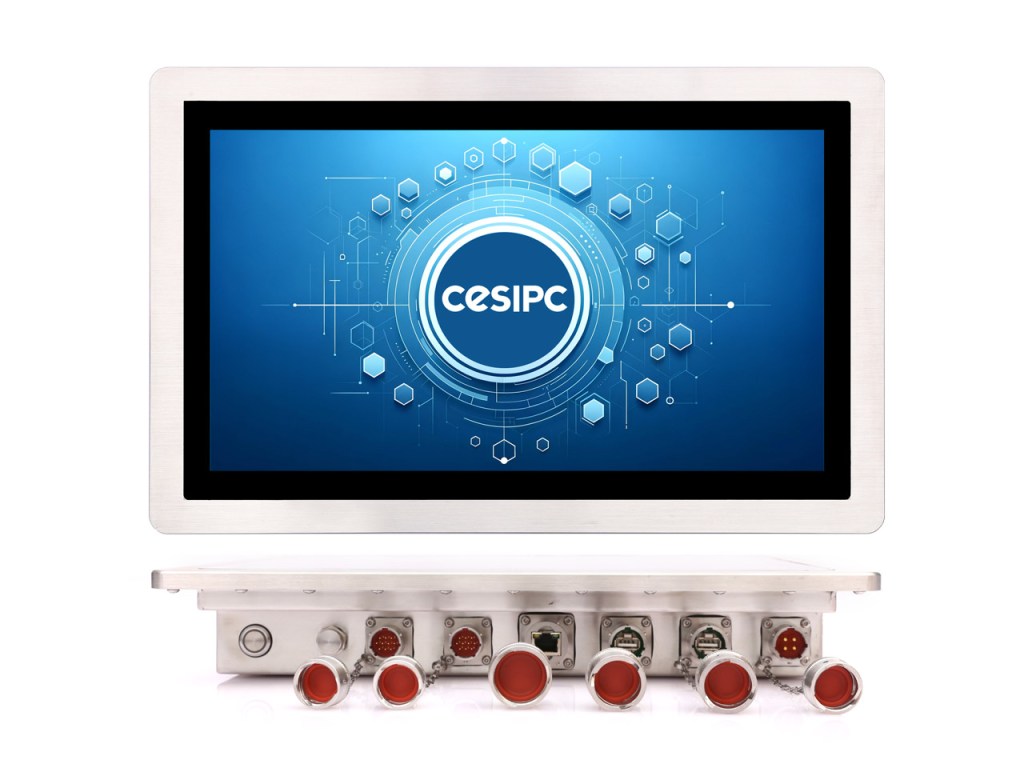
- All side IP67/IP69K protection
- Display sizes 10” 15” 15.6” 21.5”
- Stainless steel housing
- Intel Core i5-1235U 12th Gen.
- Windows11/10/7
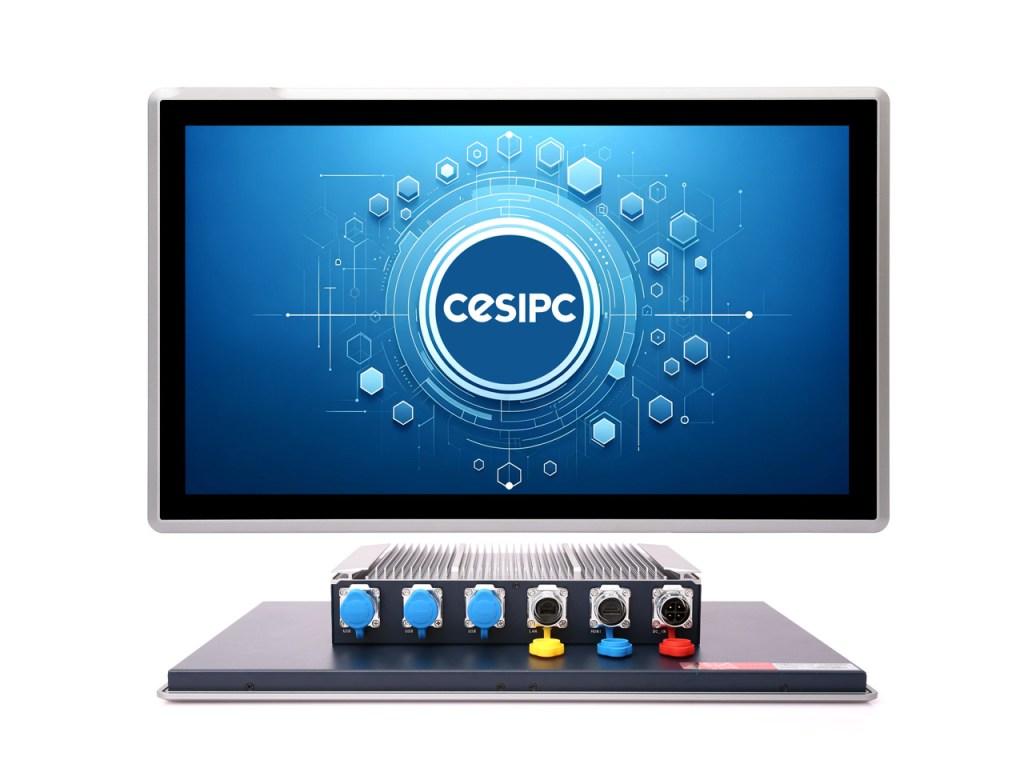
- I/O waterproof IP67
- Display sizes 21.5” 23.6”
- Intel Core i5-1235U 12th Gen.
- Windows11/10/7
- Completely fanless
The right display size for your Panel PC
When selecting a suitable Panel PC, the display size is a decisive criterion. It not only determines the overall dimensions of the device and the required installation space, but also directly affects the screen resolution, defined by the number of horizontal and vertical pixels of the Panel PC display. Especially for applications that are optimized for a fixed resolution, it is important to ensure that the selected Panel PC display matches these requirements. Otherwise, this may result in a noticeable loss of application quality.
In addition to the display size, the aspect ratio of the Industrial Panel PC must also be taken into account. The aspect ratio is calculated by dividing the horizontal resolution by the vertical resolution of the display. While classic formats such as 4:3 and 5:4 have been established in industrial applications for many years, widescreen formats such as 16:9, 16:10, and 15:9 are now widely used. Furthermore, less common formats like 21:9 are also available today, depending on the application requirements.
Overview of display sizes
| Display size (diagonal) | Resolution (px) | Aspect ratio |
| 7″ | 800 × 480 | 15:9 |
| 7″ | 1024 × 600 | 16:9 |
| 8″ | 800 × 600 | 4:3 |
| 10.1″ | 1280 × 800 | 16:10 |
| 12″ | 800 × 600 | 4:3 |
| 12″ | 1024 × 768 | 4:3 |
| 15″ | 1024 × 768 | 4:3 |
| 15.6″ | 1366 × 768 | 16:9 |
| 15.6″ | 1920 × 1080 | 16:9 |
| 17″ | 1280 × 1024 | 5:4 |
| 18.5″ | 1366 × 768 | 16:9 |
| 18.5″ | 1920 × 1080 | 16:9 |
| 19″ | 1280 × 1024 | 5:4 |
| ≥ 21.5″ | 1920 × 1080 | 16:9 |
The Panel PC and the ultimate performance
In the field of industrial computing, higher computing performance is generally associated with increased power consumption. Since industrial PCs are typically required to operate continuously—either 24/7 or at least without interruption during working days—higher power consumption can lead to increased operating costs and greater thermal load.
At the same time, increased computing performance inevitably results in heat generation, as electronic components always involve a certain level of power loss. This aspect becomes particularly critical when Panel PCs are installed in enclosed environments, such as control consoles, control cabinets, or in-wall installations. In such cases, sufficient heat dissipation must be ensured in order to comply with the specified operating temperature limits of the system.
For low-power Panel PCs, effective cooling can often be achieved using a fanless design, which offers the advantage of reduced wear and lower maintenance requirements. However, higher-performance Panel PCs generally require active cooling with fans to reliably dissipate the generated heat.
For this reason, the guiding principle should be:
“As much performance as necessary, but as little potential for failure as possible.”
The following values may serve as a rough reference for the power requirements of Industrial Panel PCs.
Low performance
- Simple HMI visualization
- Browser applications without complex graphics, JavaScript or 3D
- Static or low-dynamic user interfaces
- Time- and operation-based data acquisition
- Simple signal monitoring
- Simple database applications
- Text-based input and display
- Status and alarm display
- Operator terminals with basic functions
Medium performance
- Standard HMI visualization
- Machine control
- Browser applications
- Multi-screen and multi-mask applications
- Recipe management
- Data logging and monitoring
- MES applications
- Data acquisition
- Personnel Time Tracking
- Standard communication and interface tasks
High performance
- High demanding visualizations
- Complex HMI with animations and 3D elements
- Machine control with real-time requirements
- Motion control applications
- Video processing
- Image processing
- Vision systems
- Server applications
- Edge computing applications
Panel PC – design matters, too
When selecting a suitable Industrial Panel PC, not only display size, performance or functional features are relevant. The design and the housing concept of the Panel PC must also be given sufficient consideration.
The first question to be addressed is how the Panel PC will be installed. Several mounting concepts are commonly used in industrial environments:
- Flush mounting for installation in control cabinets, control consoles or panels
- Rack mounting (also referred to as 19-inch mounting) for installation in 19-inch cabinets or enclosures
- VESA mounting or swivel arm mounting, using wall brackets, swivel arms or support columns
- Open-frame mounting, where the Panel PC is supplied without a front panel and integrated into a separate enclosure
In addition, a special wall-mounted installation is often used in building automation systems. In this case, the Panel PC is installed in a dedicated housing, which is then integrated into brick walls or drywall constructions.
Once the mounting concept has been defined, the installation location and environmental conditions must be carefully assessed. Factors such as dust exposure, contact with water, oil or other liquids, heavy contamination from industrial machinery, and regular cleaning with chemicals directly influence the required IP protection class.
In industrial applications, IP54 and IP65 are the most commonly used protection classes:
- IP54: Protection against limited dust ingress and splashing water from all directions
- IP65 Dust-tight and protected against water jets from all directions
For particularly demanding environments, IP67 / IP69K protection is required. These protection classes are typically combined with stainless steel housings and are mainly used in industries with strict hygiene regulations, such as food and beverage, chemical, pharmaceutical and cosmetics industries.
As a general rule, all CESIPC Panel PCs offer at least IP65 protection on the front side.The higher the protection class, the higher the requirements on housing, sealing and overall system design.
What else matters? The path to the right Panel PC
The information above covers the majority of application scenarios and provides a solid basis for selecting a suitable Panel PC. However, certain applications require additional considerations. Outdoor use is a typical example.
In such cases, factors such as an extended operating temperature range—for example from –40 °C to +80 °C—as well as IP67 protection against dust, rain and snow may already be essential. Beyond this, further details must be taken into account, such as the display brightness.
On the one hand, the display must be sufficiently bright to ensure good readability even in direct sunlight. On the other hand, intelligent brightness control is required to prevent glare and eye strain for operators during night-time operation.
In many cases, it is the details that determine success or failure. The CESIPC team is familiar with these potential challenges and knows which aspects require special attention. We are happy to support you in selecting the right Panel PC and, if required, also offer on-site evaluation and analysis to ensure the optimal solution for your application.
FAQ
How do I choose the right panel PC size?
Choose the display size based on installation space, viewing distance and the amount of information the application needs to display.
Should I choose a fanless panel PC?
A fanless design is suitable when reduced maintenance, fewer moving parts and operation in dusty environments are important. Higher-performance applications may require active cooling.
What IP rating do I need for a panel PC?
The required IP rating depends on exposure to dust, water and cleaning methods. Standard machine applications may require front-panel protection, while washdown environments may require higher protection levels.
What processor do I need for a panel PC?
Simple HMI applications may require relatively low processing performance, while machine vision, image processing and edge computing typically require more powerful processors.
Can a panel PC be customized for OEM equipment?
Depending on the product platform and project requirements, panel PCs can be configured for different processors, interfaces, mounting methods and application requirements.
Contact CESIPC Team


We use your details only to answer this enquiry — no newsletters, no sharing. Drawings or a photo of the existing panel can be sent to sales@cesipc.com.