What Kind of Industrial Computer Does a Smelting Workshop Need?
Smelting Industrial Touch Panel PC Solution
From Harsh Environments to Real Value — The True Worth of CESIPC Fanless Industrial PCs
1. Who Are Our Customers?
If you search “smelting workshop industrial computer,” “high-temperature industrial PC,” or “dustproof and shockproof industrial computer” on Baidu or Google, you’re likely one of the following:
Smelting plant equipment engineers – responsible for upgrading production control systems, focusing on equipment lifespan and compatibility.
Automation system integrators – providing complete control system solutions for smelting or casting customers, pursuing a balance of reliability and cost.
Information/digital transformation managers – implementing MES/SCADA systems, requiring terminals that can run stably in high-temperature, dusty environments.
All of you share a common need:
A long-term stable industrial computer that can continuously collect, transmit, and process data in the harsh conditions of a smelting workshop.
2. How Harsh Is the Smelting Workshop Environment?
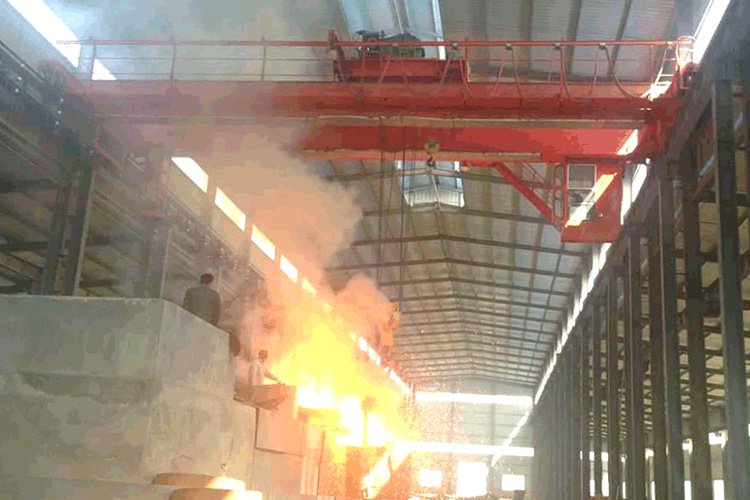
After conducting field surveys in 47 foundries and smelting plants, we found the following typical characteristics:
Environmental Factor
Typical Data
Impact on Industrial Computer
Dust concentration
0.3–0.9 g/m³
Fan draws in dust → motherboard short circuit
Ambient temperature
45–70 °C
Regular computers crash easily
Power fluctuation
±35 %
System restarts, data loss
Vibration/shock
> 2 G during crane operation
Loose drives and connectors
Oil/moisture
Persistent
Corrodes metal connectors and circuits
In such conditions, any commercial computer with a fan or mechanical hard drive usually fails within three months. That’s why fanless industrial PCs are essential for smelting workshops.
3. What Makes an Industrial PC Run Reliably in a Smelting Workshop?
(1) Fanless Design – Complete Dust Protection
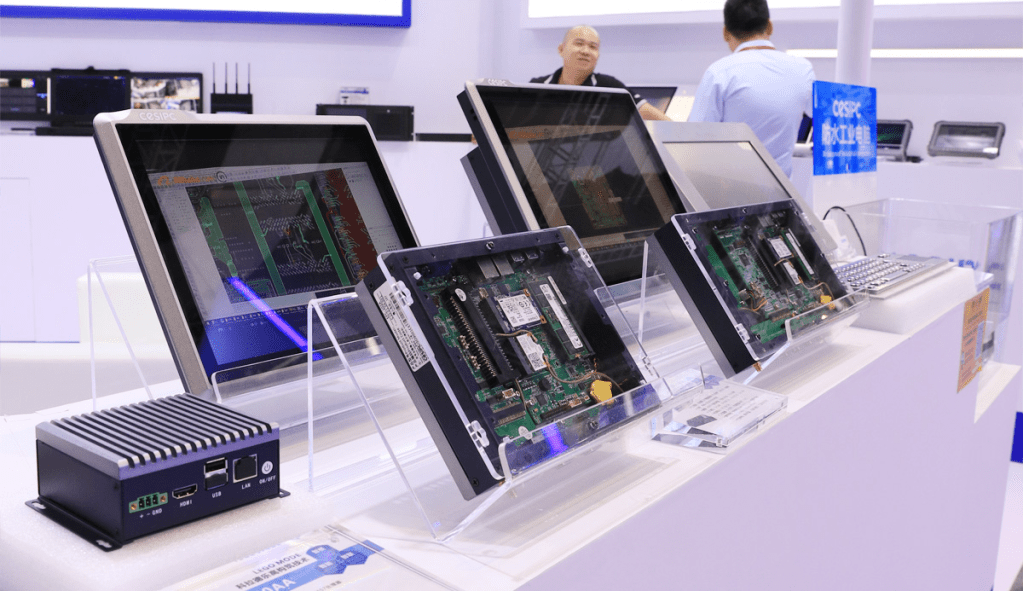
The air in smelting workshops is full of metallic dust that can easily short-circuit electronics once it enters the fan or motherboard. CESIPC LEGO series fanless industrial PCs use an all-aluminum unibody design with heat-dissipating fins, achieving true fanless passive cooling.
Key Features:
No air inlets, IP65-rated front panel
Long-term operation without cleaning fans
Fully enclosed internal components to block dust and oil mist
If the dust can’t get in, the machine won’t break.
(2) Wide Temperature Range – Excellent Heat Resistance
Near furnaces or smelting areas, ambient temperature often exceeds 60 °C. CESIPC industrial PCs use industrial-grade wide-temperature motherboards and solid-state drives (SSD) to ensure stable operation between −20 °C and +70 °C.
Specification
Regular PC
CESIPC LEGO Industrial PC
Cooling
Fan
Full-aluminum passive cooling
Operating Temp.
0–40 °C
−20–70 °C
MTBF
5,000 hours
≥ 50,000 hours
(3) Wide Voltage Power Design – Stable Against Power Fluctuations
Power instability is common in smelting plants, with voltage fluctuations of up to ±35 %. LEGO series PCs support 9–36 V wide-voltage input, featuring:
Over-voltage/under-voltage protection (OVP/UVP)
Short-circuit protection (SCP)
Automatic restart (Power Restore)
Even after sudden power loss, the system automatically recovers without file corruption — critical for MES, PLC data collection, and SCADA monitoring.
“No power interruption” is the foundation of stable production.
(4) Modular Interfaces – Flexible Connectivity
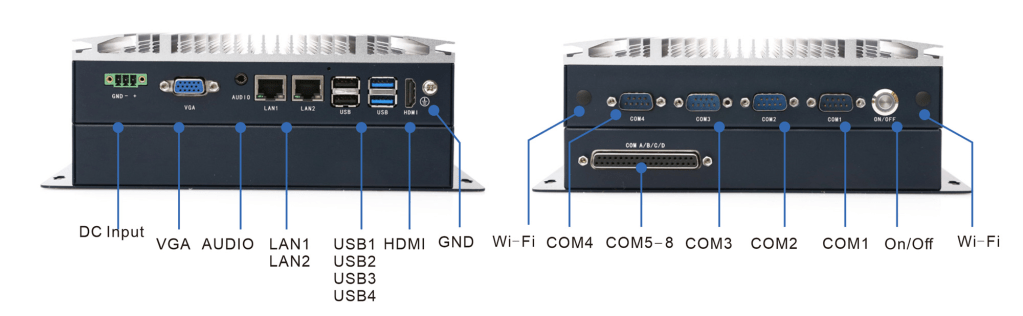
Data collection in smelting workshops often involves temperature sensors, PLCs, weighing devices, and upper-level systems. CESIPC industrial PCs provide rich expansion interfaces:
6 × COM (RS232/422/485 selectable)
4 × USB 3.0
Dual Gigabit LAN
HDMI + DP dual display output
Optional Wi-Fi/4G/5G modules
Whether for automation control or production data acquisition, one device covers all communication needs.
4. Case Study – 26 LEGO Fanless Industrial PCs in a Smelting Crane Workshop
Deployment: 26 units Environment: High temperature + high dust + strong vibration Duration: 14 months of continuous operation
Metric
Before Deployment
After Deployment
Improvement
Data entry
Manual + paper
Real-time touch input
+27 % efficiency
Equipment failure rate
PCs failed every 3 months
14 months continuous
+400 % stability
Data traceability
15 % data loss
99.8 % data completeness
Precise traceability
Maintenance frequency
Quarterly replacement
Annual inspection
−60 % maintenance cost
In short: Only the industrial PCs that can survive on site are truly industrial-grade.
5. Why Choose CESIPC?
Comparison
CESIPC LEGO Industrial PC
Ordinary Industrial PC
Structural design
Fanless all-aluminum body
Fan-cooled chassis
Protection rating
IP65 front panel
None
Power input
9–36 V wide voltage
Fixed voltage
Storage
Industrial-grade SSD (with PLP)
Consumer SSD/HDD
Stability
> 50,000 h continuous run
~ 5,000 h lifespan
Application scope
Smelting, lifting, casting
General environments
CESIPC believes:
Industrial computing devices must be built for the real field environment.
6. Conclusion
In a smelting workshop, the requirement for an industrial PC is not just to “turn on,” but to run stably and reliably for years in harsh conditions.
The CESIPC LEGO Series Fanless Industrial PCs deliver that with robust construction, reliable power design, and wide-temperature operation — ensuring every data point is trusted and every system runs continuously and safely.