


Who the EPC-107A configuration is for
The EPC-107A is the second Celeron configuration of CESIPC’s EPC-10XA fanless embedded industrial PC. It uses an Intel Celeron J6412 quad-core processor (2.0–2.6 GHz, 10 W TDP) — two generations newer than the J1900 — with 8 GB of DDR4 memory expandable to 16 GB and a 128 GB SSD, inside the same 229 × 160 × 47 mm chassis as the rest of the series.
Choose it over the EPC-106A when the project needs more running memory or a bigger system volume: 16 GB of DDR4 instead of 8 GB of DDR3L, and two USB 3.0 ports instead of one. Standard storage is the same 128 GB SSD on both. That is what lets one box run a heavier gateway application, a local buffer or a small historian alongside the machine interface.
It carries four USB 2.0 ports and two USB 3.0 ports. The two USB 3.0 ports matter when the box has to read a fast USB stick or an external SSD during commissioning, while the four USB 2.0 ports still cover scanners, keyboards and USB-to-serial adapters.
Specify the EPC-107A when you want a modern, long-lifecycle Celeron board that can grow with the software over the life of the machine, but the workload still does not justify a Core i3, i5 or i7. If the box will run vision or several applications at once, move up to the EPC-109A or EPC-102A.
One caveat: the J1900 in the EPC-106A is the only board CESIPC lists Windows 7 support for. The J6412 ships with Windows 10, Windows 11 or Ubuntu 16.04–22.04, so verify legacy machine-software compatibility before standardising on this configuration.
Choose the right EPC-10XA configuration
All four configurations share the same 229 × 160 × 47 mm extruded aluminium chassis, the same mounting bracket and VESA pattern, the same 219 × 100 mm installation footprint, the same 3× DB9 serial (RS-232 ×2 + RS-485 ×1) and the same 2× Intel I210 Gigabit LAN. Only the compute board, memory, storage, USB mix and integrated graphics change.
| EPC-106A | EPC-107Acurrent | EPC-109A | EPC-102A | |
|---|---|---|---|---|
| Processor | Intel Celeron J1900, 4 cores, 2.0–2.4 GHz, 10 W | Intel Celeron J6412, 4 cores, 2.0–2.6 GHz, 10 W | Intel Core i3-10110U / i5-10210U / i7-10510U, 15 W | Intel Core i3-1215U / i5-1235U / i7-1250U |
| Memory | DDR3L 4–8 GB | DDR4 4–16 GB | DDR4 4–32 GB | DDR5 8–32 GB |
| Standard memory | 4 GB DDR3L (8 GB max) | 8 GB DDR4 (16 GB max) | 8 GB DDR4 (32 GB max) | 8 GB DDR5 (32 GB max) |
| Standard storage | 1× mSATA SSD, 128 GB standard | 1× mSATA SSD, 128 GB standard | 1× mSATA + 1× M.2 SSD, 128 GB standard | 2× M.2 SSD, 256 GB standard |
| USB ports | 5 × USB 2.0 + 1 × USB 3.0 | 4 × USB 2.0 + 2 × USB 3.0 | 2 × USB 2.0 + 4 × USB 3.0 | 2 × USB 2.0 + 4 × USB 3.0 |
| Graphics | Intel HD | Intel UHD | Intel UHD | Intel UHD (i3-1215U) / Iris Xe (i5, i7) |
| Windows 7 support | Yes | Not listed | Not listed | Not listed |
| Best for | Lowest-cost gateways and data nodes with several USB 2.0 devices | Newer Celeron board with more memory headroom | Multi-application gateways, historians and in-box SQL logging | Vision, on-box analytics and edge inference |

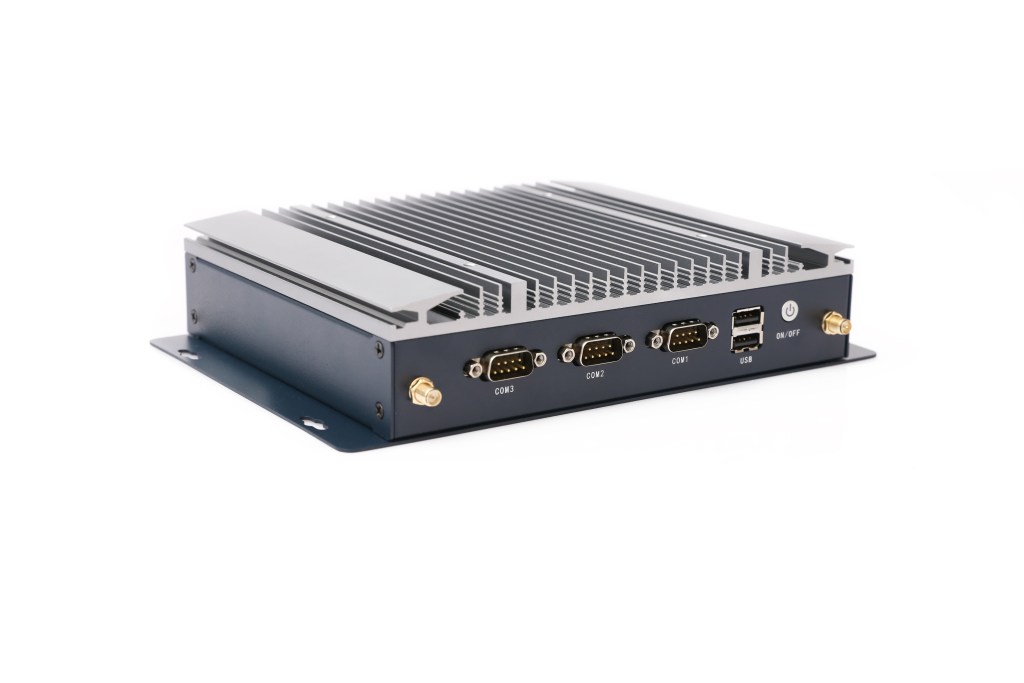
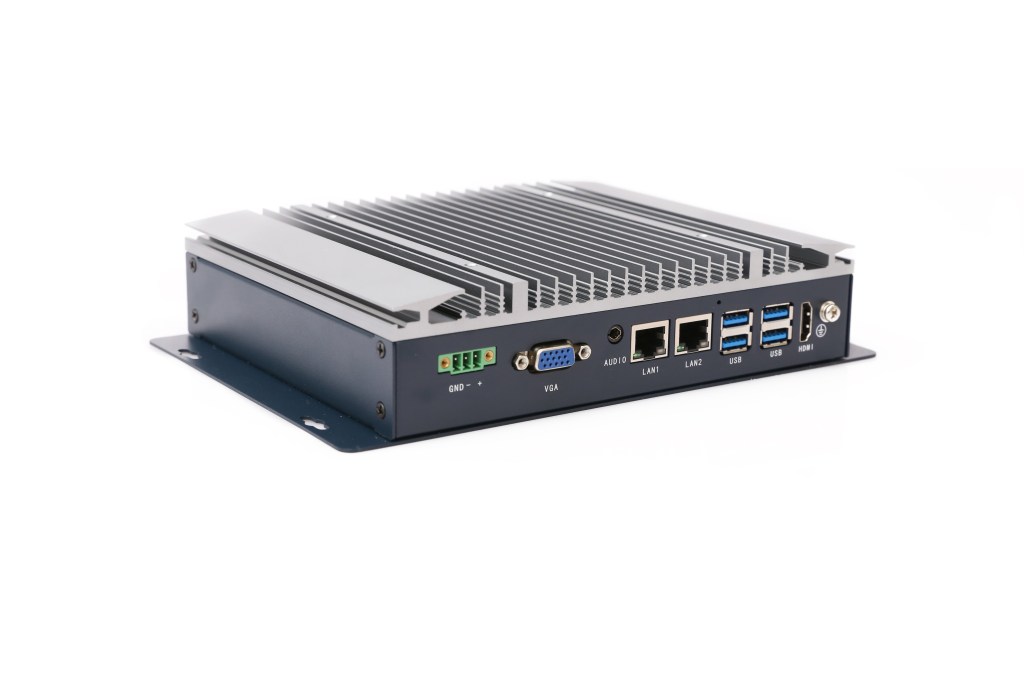
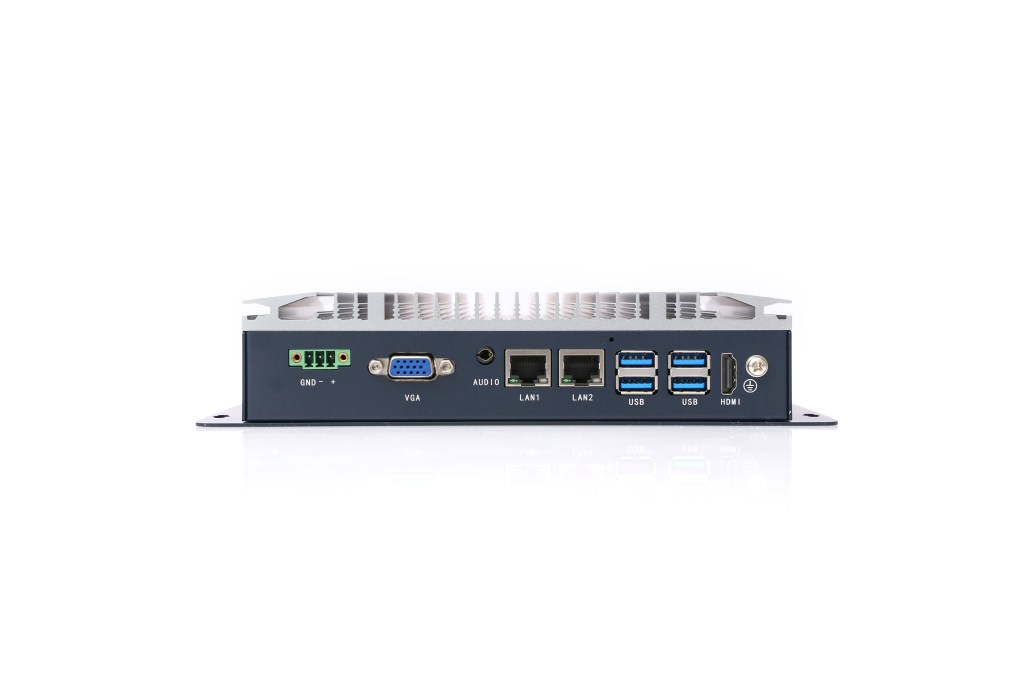

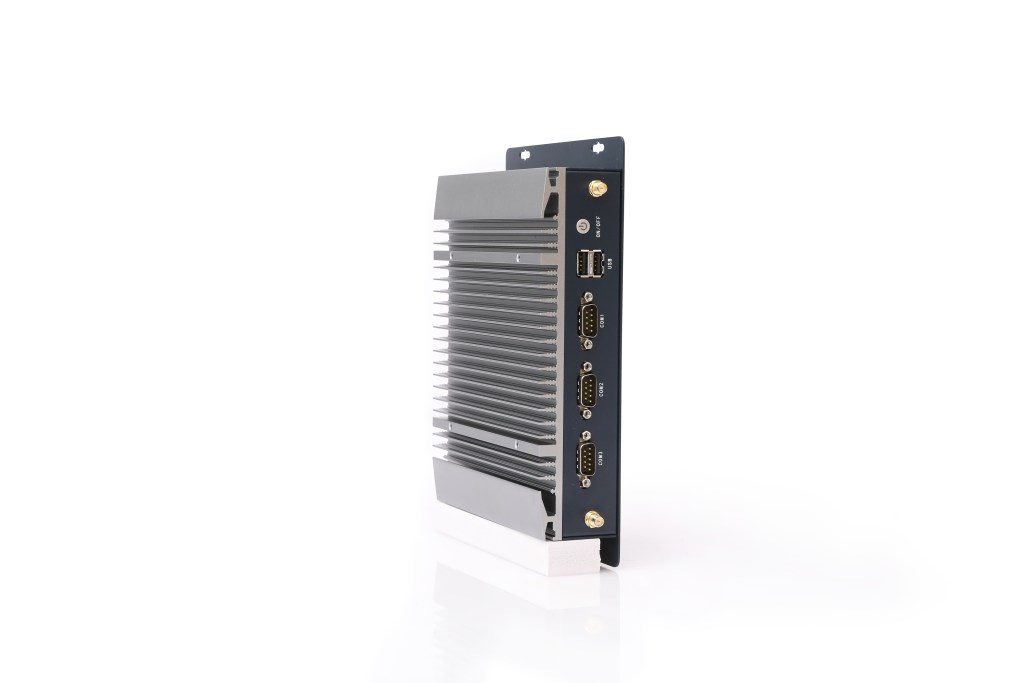

Highlights:
- Intel® Celeron J6412 quad-core, 2.0–2.6 GHz, 10 W, 1.5 MB cache
- 8 GB DDR4 (16 GB maximum) · 1× mSATA SSD, 128 GB standard
- 0°C to 50°C (-40°C to 70°C optional)
- Dual Intel® I210 Gigabit LAN
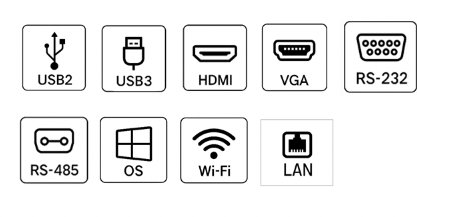
- 3× DB9 serial: RS-232 ×2, RS-485 ×1
- 6× USB: USB 2.0 ×4, USB 3.0 ×2
- HDMI + VGA dual display, 3.5 mm audio
- 12V DC standard, 9–36V DC optional
- TPM 2.0, SafeCore™ power-loss protection
- Cable-less internal design
- OS: Windows 10/11, Ubuntu 16.04–22.04
- Fanless design, CESIPC BlockCore architecture
- 6063 high-strength aluminium chassis, 1.48 kg
- Bracket mount + VESA mount
- 60,000-hour MTBF, CE / FCC
- 24/7 non-stop operation
Typical Applications:

FAQ
Answers for the EPC-107A build. Platform-wide questions — chassis, protection, mounting and the upgrade path — are answered on the EPC-10XA overview page.
What CPU, memory and storage does the EPC-107A ship with?
The EPC-107A ships with an Intel Celeron J6412 quad-core processor at 2.0–2.6 GHz with 1.5 MB of cache and a 10 W TDP, 8 GB of DDR4 memory expandable to 16 GB, and a 128 GB SSD. Integrated Intel UHD graphics drive the HDMI and VGA outputs. Other memory and SSD sizes are built to order at the factory.
How is the EPC-107A different from the EPC-106A?
Same chassis, same 219 × 100 mm installation footprint, same mounting bracket. The EPC-107A steps up to a Celeron J6412 with DDR4 memory and two USB 3.0 ports alongside four USB 2.0; the EPC-106A has a J1900 with DDR3L and one USB 3.0 plus five USB 2.0. Both ship with a 128 GB SSD. Windows 7 is available only on the EPC-106A.
Can the EPC-107A run a gateway plus a local database?
Yes, within limits. 8 GB of DDR4 expandable to 16 GB and a 128 GB SSD are enough for an OPC UA or MQTT gateway with a single-site buffer or a small historian. For a larger database, several concurrent clients or on-box analytics, specify the EPC-109A with up to 32 GB DDR4 or the EPC-102A with DDR5 — the chassis and mounting do not change.
Does the EPC-107A support Windows 7?
No. CESIPC lists Windows 7 support only for the Celeron J1900 board in the EPC-106A. The EPC-107A with its Celeron J6412 ships with Windows 10, Windows 11 or Linux Ubuntu 16.04, 18.04, 20.04 and 22.04, so legacy machine software that requires Windows 7 should stay on the EPC-106A.
Contact Us


We use your details only to answer this enquiry — no newsletters, no sharing. Drawings or a photo of the existing panel can be sent to sales@cesipc.com.
We use your details only to answer this enquiry — no newsletters, no sharing. Drawings or a photo of the existing panel can be sent to sales@cesipc.com.