


Who the EPC-106A configuration is for
The EPC-106A is the entry configuration of CESIPC’s EPC-10XA fanless embedded industrial PC. It pairs an Intel Celeron J1900 quad-core processor (2.0–2.4 GHz, 10 W TDP) with 4 GB of DDR3L memory and a 128 GB mSATA SSD inside a 229 × 160 × 47 mm extruded aluminium chassis that weighs 1.48 kg.
Specify it when the box is a protocol converter or a data-collection node rather than a computer: machine gateways, CNC and motion-control front ends, barcode and weighing stations, and cabinet-mounted display drivers. That duty is a fixed application talking over serial and Ethernet, which the J1900 covers at 10 W with no fan.
It is the only EPC-10XA configuration with five USB 2.0 ports, against four on the EPC-107A and two on the EPC-109A and EPC-102A. If a box has to hang several USB 2.0 devices — a barcode scanner, a keyboard, a USB-to-serial adapter and two measuring instruments — this is the configuration that survives without a hub.
The J1900 is also the only board CESIPC lists Windows 7 support for, which matters when the machine software was never certified on a newer operating system. Windows 10 and Windows 11 are supported as well, along with Ubuntu 16.04 to 22.04.
Choose a different configuration if the box will run vision, a local historian or several applications at once — those need the DDR4 or DDR5 boards. Step up to the EPC-109A (10th Gen Core) or the EPC-102A (12th Gen Core). The chassis, mounting bracket, VESA pattern and 219 × 100 mm installation footprint do not change.
Choose the right EPC-10XA configuration
All four configurations share the same 229 × 160 × 47 mm extruded aluminium chassis, the same mounting bracket and VESA pattern, the same 219 × 100 mm installation footprint, the same 3× DB9 serial (RS-232 ×2 + RS-485 ×1) and the same 2× Intel I210 Gigabit LAN. Only the compute board, memory, storage, USB mix and integrated graphics change.
| EPC-106Acurrent | EPC-107A | EPC-109A | EPC-102A | |
|---|---|---|---|---|
| Processor | Intel Celeron J1900, 4 cores, 2.0–2.4 GHz, 10 W | Intel Celeron J6412, 4 cores, 2.0–2.6 GHz, 10 W | Intel Core i3-10110U / i5-10210U / i7-10510U, 15 W | Intel Core i3-1215U / i5-1235U / i7-1250U |
| Memory | DDR3L 4–8 GB | DDR4 4–16 GB | DDR4 4–32 GB | DDR5 8–32 GB |
| Standard memory | 4 GB DDR3L (8 GB max) | 8 GB DDR4 (16 GB max) | 8 GB DDR4 (32 GB max) | 8 GB DDR5 (32 GB max) |
| Standard storage | 1× mSATA SSD, 128 GB standard | 1× mSATA SSD, 128 GB standard | 1× mSATA + 1× M.2 SSD, 128 GB standard | 2× M.2 SSD, 256 GB standard |
| USB ports | 5 × USB 2.0 + 1 × USB 3.0 | 4 × USB 2.0 + 2 × USB 3.0 | 2 × USB 2.0 + 4 × USB 3.0 | 2 × USB 2.0 + 4 × USB 3.0 |
| Graphics | Intel HD | Intel UHD | Intel UHD | Intel UHD (i3-1215U) / Iris Xe (i5, i7) |
| Windows 7 support | Yes | Not listed | Not listed | Not listed |
| Best for | Lowest-cost gateways and data nodes with several USB 2.0 devices | Newer Celeron board with more memory headroom | Multi-application gateways, historians and in-box SQL logging | Vision, on-box analytics and edge inference |


Highlights:
- Intel® Celeron J1900 quad-core, 2.0–2.4 GHz, 10 W, 2 MB cache
- 4 GB DDR3L (8 GB maximum) · 1× mSATA SSD, 128 GB standard
- 0°C to 50°C (-40°C to 70°C optional)
- Dual Intel® I210 Gigabit LAN
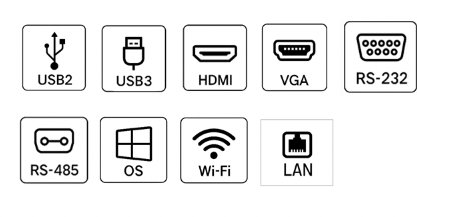
- 3× DB9 serial: RS-232 ×2, RS-485 ×1
- 6× USB: USB 2.0 ×5, USB 3.0 ×1
- HDMI + VGA dual display, 3.5 mm audio
- 12V DC standard, 9–36V DC optional
- TPM 2.0, SafeCore™ power-loss protection
- Cable-less internal design
- OS: Windows 7, Windows 10/11, Ubuntu 16.04–22.04
- Fanless design, CESIPC BlockCore architecture
- 6063 high-strength aluminium chassis, 1.48 kg
- Bracket mount + VESA mount
- 60,000-hour MTBF, CE / FCC
- 24/7 non-stop operation
Typical Applications:

FAQ
Answers for the EPC-106A build. Platform-wide questions — chassis, protection, mounting and the upgrade path — are answered on the EPC-10XA overview page.
What CPU, memory and storage does the EPC-106A ship with?
The EPC-106A ships with an Intel Celeron J1900 quad-core processor at 2.0–2.4 GHz with 2 MB of cache and a 10 W TDP, 4 GB of DDR3L memory expandable to 8 GB, and a 128 GB mSATA SSD. Integrated Intel HD graphics drive the HDMI and VGA outputs. Different memory and SSD sizes are built to order.
How is the EPC-106A different from the EPC-107A?
Both use the identical 229 × 160 × 47 mm chassis, 219 × 100 mm installation footprint and mounting bracket. The EPC-106A runs a Celeron J1900 with DDR3L memory, a 128 GB SSD and five USB 2.0 plus one USB 3.0 port; the EPC-107A runs a Celeron J6412 with DDR4 memory, a 128 GB SSD and four USB 2.0 plus two USB 3.0 ports. Only the J1900 is listed for Windows 7.
Does the EPC-106A support Windows 7?
Yes, and it is the only configuration in the EPC-10XA series that does, because CESIPC lists Windows 7 support for the Celeron J1900 board only. Windows 10, Windows 11 and Ubuntu 16.04, 18.04, 20.04 and 22.04 are supported as well. The EPC-106A is therefore the configuration to choose when a machine runtime was never certified on a newer operating system.
How many serial and USB ports does the EPC-106A provide?
The EPC-106A carries three DB9 serial ports — two RS-232 and one RS-485 — plus six USB ports made up of five USB 2.0 Type-A and one USB 3.0 Type-A, two Intel I210 Gigabit LAN ports, one HDMI and one VGA output, and a 3.5 mm audio jack. It has the highest USB 2.0 count in the series, which suits boxes that hang several USB 2.0 instruments.
Contact Us


We use your details only to answer this enquiry — no newsletters, no sharing. Drawings or a photo of the existing panel can be sent to sales@cesipc.com.
We use your details only to answer this enquiry — no newsletters, no sharing. Drawings or a photo of the existing panel can be sent to sales@cesipc.com.