
Embodied AI Is Reshaping Robotics. Here’s the Hardware Behind It
Robots are no longer confined to science fiction or research laboratories. From autonomous logistics robots navigating warehouses to intelligent delivery systems operating in real-world commercial spaces, embodied AI is rapidly becoming one of the hottest technology trends of 2026.
Unlike traditional AI systems that only process information in the cloud, embodied intelligence refers to physical AI systems that can perceive, reason, and act in the real world through sensors, onboard computing, and motion control.
These intelligent machines must constantly interpret camera feeds, understand dynamic environments, make split-second decisions, and execute actions safely and reliably.
This requires far more than standard embedded hardware. It demands a robust, industrial-grade edge AI computing platform. That is where the CESIPC EA-N500 AI Computing Industrial PC delivers exceptional value.
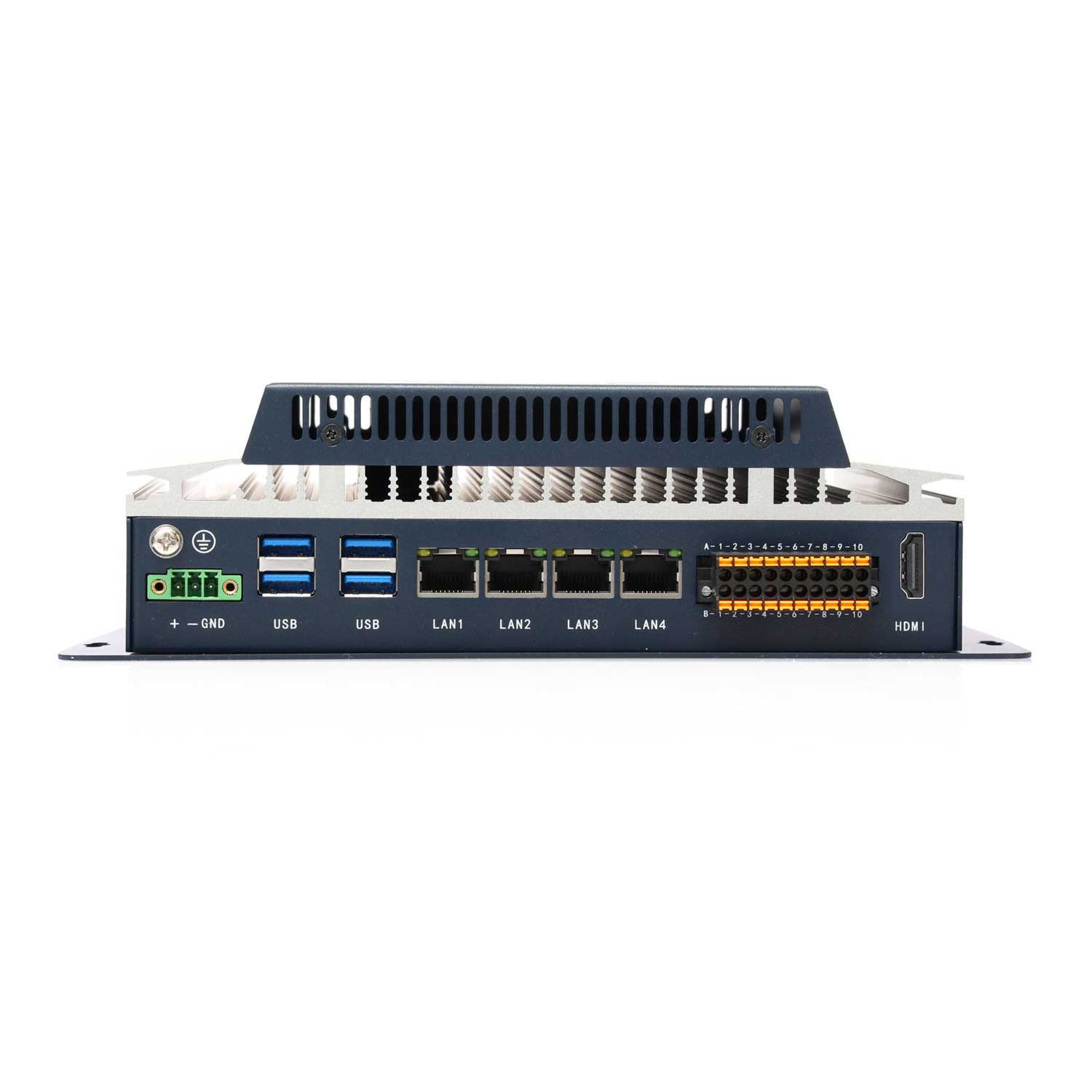
CESIPC EA-N500 AI Computing Industrial PC
Up to 157 TOPS | Fanless | 9–36V wide input | Multi-camera support (GigE / USB) | ROS/ROS2 ready
Explore EA-N500 →The Real Challenge Behind Embodied AI Robotics
For an embodied robot, intelligence is not just about running AI models. It is about executing a real-time perception-to-action loop:
(Multiple cameras capture data → object detection & path planning → navigation commands → actuator control → milliseconds repeat)
Even minor delays can affect operational safety and navigation accuracy. Cloud-based processing introduces latency, instability, and dependence on network connectivity. That is why modern robotics increasingly relies on local edge computing.
Why Standard Embedded Boards Often Fail in Real Deployment
Many robotics developers begin with commercial AI development boards. These platforms may work during prototyping, but often encounter limitations during real-world deployment:
- Thermal throttling during continuous inference
- Unstable power behavior in mobile robotic systems
- Limited industrial I/O expandability
- Weak vibration resistance
- Difficulty supporting multiple camera interfaces
- Poor long-term reliability under 24/7 operation
Embodied AI robots require compute systems designed for industrial environments, not laboratory demonstrations.
How the EA-N500 Powers Vision-Based Autonomous Robotics
The CESIPC EA-N500, powered by NVIDIA Jetson Orin NX, is purpose-built for edge AI robotics deployment. It enables robots to connect multiple vision sensors through Gigabit Ethernet and USB interfaces while processing high-speed AI workloads locally.
Key advantages include:
Supports real-time:
- Object detection & classification
- Visual SLAM (vSLAM)
- Intelligent path planning
- Multi-camera perception fusion
- Autonomous obstacle avoidance
Flexible Camera Connectivity for Perception Pipelines
Robotics developers can integrate USB industrial cameras, GigE vision cameras, and multi-sensor synchronized vision systems, enabling robust machine vision pipelines for navigation and environmental understanding.
Industrial Stability for Mobile Robotics
Built for harsh deployment conditions: fanless thermal architecture, wide voltage input (9–36V DC), vibration-resistant aluminum chassis, and continuous 24/7 operation capability. Ideal for autonomous logistics robots, warehouse AMRs, smart delivery robots, inspection robotics, and vision-guided mobile platforms.
Native Robotics Ecosystem Compatibility
The EA-N500 is optimized for NVIDIA CUDA, TensorRT, ROS / ROS2, OpenCV, DeepStream, and AI perception frameworks. This significantly reduces deployment complexity and accelerates product commercialization.
Real-World Deployment Validation
The EA-N500 has already been integrated into commercial autonomous robotics platforms as an onboard AI vision computing controller. In these deployments, multiple cameras connect directly through Ethernet and USB interfaces, enabling real-time environmental perception, autonomous navigation, dynamic obstacle recognition, and reliable edge-based AI decision-making. This demonstrates its readiness for large-scale embodied AI deployment.
Why Industrial Edge Computing Defines the Future of Robotics
The robotics industry is entering a new era. As embodied intelligence moves from experimental prototypes to commercial deployment, compute hardware is becoming the robot’s true nervous system. Reliable edge AI computing determines whether a robot can navigate safely, process vision instantly, operate continuously, and scale from prototype to production. Without stable onboard intelligence, even advanced robotics software cannot succeed.
The future of embodied AI depends on industrial computing platforms built for the physical world. CESIPC is helping power that future.
FAQ
What is embodied AI?
Embodied AI refers to intelligent physical systems that can perceive, process, and interact with the real world using onboard sensors, computing, and motion control.
Why is edge computing essential for robotics?
Edge computing eliminates cloud latency, enabling real-time local AI inference for navigation, obstacle avoidance, and motion control.
Can the EA-N500 support multi-camera robotics applications?
Yes. It supports both USB and Gigabit Ethernet cameras, making it ideal for multi-camera perception systems.
Is the EA-N500 suitable for 24/7 industrial robotics deployment?
Yes. Its fanless design, industrial thermal structure, and wide-voltage input make it highly reliable for continuous operation.
Contact CESIPC Team
Talk to a CESIPC Engineer
Our application engineers are ready to help you select the right configuration, discuss ODM requirements, or provide a tailored quotation for your project.
Typical response within 24 hours · Multilingual support · CE / FCC / BIS compliant


We use your details only to answer this enquiry — no newsletters, no sharing. Drawings or a photo of the existing panel can be sent to sales@cesipc.com.