
Last updated: 2 November 2026
A cleanroom is not simply a clean room. Equipment inside it has to stop generating particles, survive the disinfectants used on it, and avoid becoming a source of static discharge or electromagnetic noise. For the computer running the process window or the MES terminal, that changes the specification more than the processor choice does.
This page covers what a cleanroom PC has to do differently, how to match the IP rating to the zone, and which CESIPC configuration fits semiconductor fabs, pharmaceutical filling lines and the washdown areas outside them.
What a cleanroom computer has to do differently
Five requirements separate a cleanroom panel PC from an ordinary industrial one. They matter more than resolution or clock speed, because a failure here contaminates the environment rather than breaking a screen.
- It must not move air. A fan turns the chassis into a particle pump and pulls contamination through a filter that then has to be serviced inside the clean zone. Fanless is the default, not a premium option.
- It must be cleanable without gaps. Flat front faces, no exposed fasteners and no recessed seams, so an IPA or sporicidal wipe reaches everything and nothing collects in a corner.
- It must survive the disinfectant. The chemicals used to keep a cleanroom clean are more aggressive than the dust they remove, and gaskets and coatings fail long before the metal does.
- It must not add electrical noise. In a fab the panel sits beside sensitive process tools, so ESD protection and EMI shielding are part of the requirement rather than an accessory.
- It must be serviceable from outside. Anything opened inside the clean zone has to be re-cleaned and re-qualified afterwards, so storage and I/O access belong on the non-clean side wherever the layout allows it.
Which protection level does a cleanroom PC need?
The IP rating follows the cleaning action, not the room classification. A fab that wipes its panels has different requirements from a filling line that hoses the wall outside the isolator.
| Zone | What the PC has to survive | Configuration | CESIPC series |
|---|---|---|---|
| ISO Class 5–6 fab semiconductor process floor | Particle shedding from vents and fans, ESD events, solvent wipe-down on the front only | Fanless, sealed front, flat touch surface, optional ESD and low-EMI design | EPC-W1592A, IP65 front |
| ISO Class 7–8 pharma filling, IVD, medical device | Frequent wipe-down with IPA or sporicidal agents, smooth non-shedding surfaces | Stainless front bezel, chassis built into the wall or the isolator | S-Grade, IP69K front bezel |
| Washdown zone at the cleanroom exit | Low-pressure rinse and the occasional lance, water reaching the rear of the cabinet | Full 304 stainless enclosure, sealed M12 connectors, arm or stand mounting | G-Series, IP67/IP69K |
| Corrosive or chloride residue | Corrosion rather than water: salt air and sanitiser residue left standing | 304 minimum, 316L where chlorides stay wet | G-Series in 304 or 316L |
The common mistake is buying a full stainless washdown unit for an ISO Class 6 tool position, where nothing is ever hosed and the weight and arm loading become the real problem instead. The reverse mistake costs more: a front-only rating in a zone that gets rinsed at the rear corrodes at the cable entries first. How IP65, IP67 and IP69K are actually tested sets out what each code covers.
EPC-W1592A: a 15.6″ panel PC for semiconductor cleanrooms
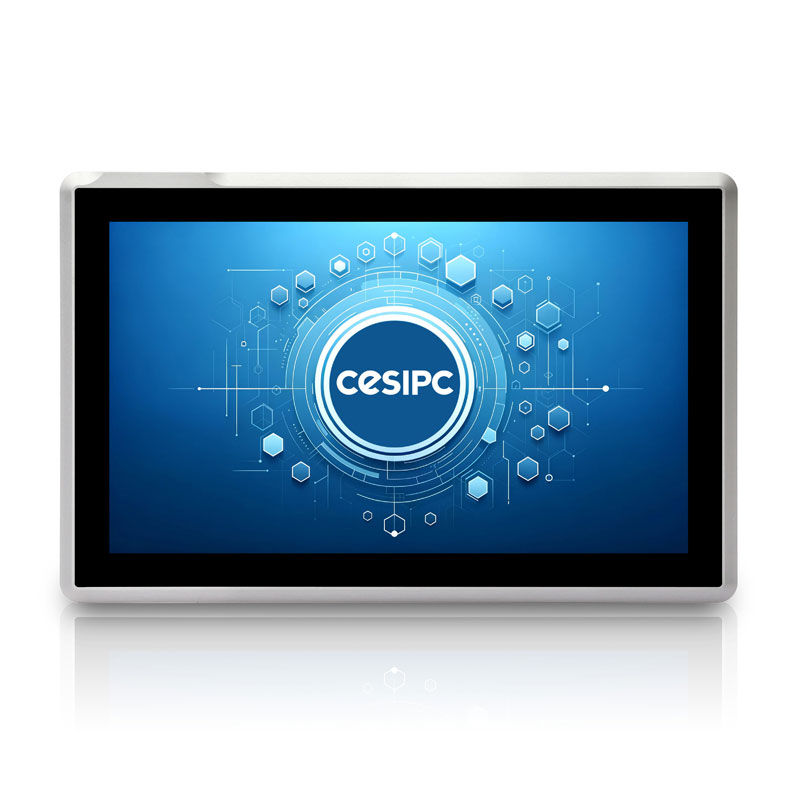
The EPC-W1592A 15.6″ industrial panel PC is the configuration most often specified for fab interiors, where the panel sits on a tool or a wall arm and is cleaned by wipe rather than by hose.
Its 16:9 aluminium front keeps the bezel narrow, which matters when the panel is mounted into an equipment face rather than on a wall.
| Feature | What it changes on the cleanroom floor |
|---|---|
| Fanless, fully enclosed housing | No airflow through the chassis, so no particle stream and no filter to change inside the clean zone, and no moving parts to shed material. |
| IP65 front with flat touch screen | A seamless front face that survives IPA wipe-down and UV sterilisation, with no gap for particles or residue to collect in. |
| Anti-static, low-EMI design (optional) | Reduces static discharge risk next to sensitive tools and keeps the panel from disturbing process equipment with electrical noise. |
| 10th Gen Intel® Core performance | Runs HMI software, monitoring and remote diagnostics with the headroom for real-time data and MES/SCADA integration. |
| Versatile I/O | Connects PLCs, sensors, barcode readers and wafer inspection machines, including COM, USB and LAN for legacy equipment. |
| Flexible mounting | VESA on a wall or arm, or embedded into wafer-handling equipment. A stainless steel version is available for corrosive or ultra-hygienic zones. |
Where an aluminium-front panel with a different screen size or housing is a better fit, the EPC-S1222A industrial touch panel PC and the LEGO embedded panel PC range share the same fanless architecture and mounting logic.
Typical use cases on a semiconductor floor
- Photolithography workstations — monitoring resist coating, baking and exposure steps
- Etching and deposition stations — control of gas flow, vacuum and plasma systems
- Wafer inspection areas — displaying high-resolution imaging and analysis results
- MES terminals at cleanroom entry points — operator log-in, recipe upload and material tracking
- Tool control panels — embedded into OEM semiconductor process tools
Cleanroom, hygienic or washdown: choosing the series
Three configurations cover almost every cleanroom request we receive, and the decision is driven by how the surface gets cleaned:


- Wiped only, aluminium housing acceptable — EPC-W1592A or the LEGO embedded range, front IP65, mounted on the tool or the wall.
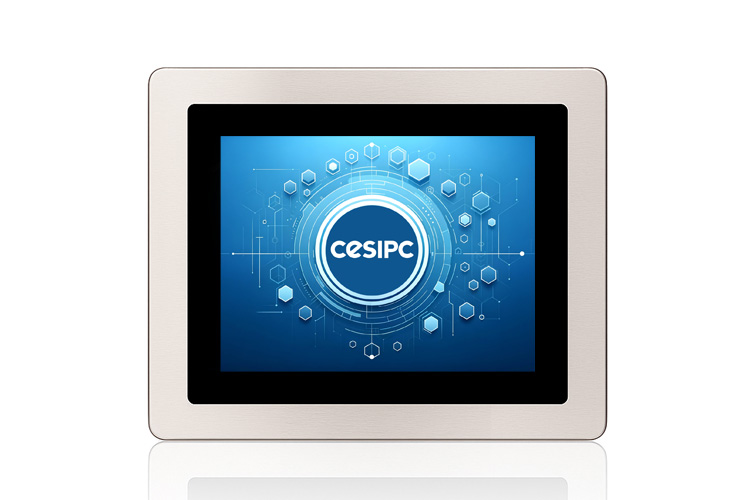
- Stainless front, chassis inside the wall or isolator — the S-Grade IP69K stainless panel PC with a front bezel, which has to be embedded and is not a standalone display.
- Whole enclosure washed down on an arm or stand — the full 304 stainless IP69K washdown panel PC, where the entire housing is stainless and hose-rated.
Proven results
“We integrated EPC-W1592A units into our Class 10 cleanroom workstations. They meet our strict cleanliness standards, and the fanless system reduced equipment maintenance needs.”
– Cleanroom Engineer, Semiconductor Foundry
Why CESIPC
- Over 16 years in industrial computer design
- In-house SMT and sheet metal manufacturing
- Customisation for ESD, EMI and stainless steel requirements
- Global presence and long-term project support
Cleanroom PC FAQ
The answers below describe how CESIPC cleanroom and stainless units are specified. Figures that would need a site survey to confirm, such as particle counts inside a customer fab or the cleaning chemistry in use, are deliberately left out rather than estimated. Ratings and processor options are as published for each unit; confirm the current revision with CESIPC before specifying.
What is a cleanroom PC?
A cleanroom PC is a computer built to run inside a classified clean environment without contaminating it. That means a fanless sealed enclosure, a flat front that can be wiped, and materials that neither shed particles nor trap residue, rather than a standard industrial PC placed inside a clean room.
Does a cleanroom computer need to be fanless?
In practice, yes. A fan pushes air through the chassis and carries particles out through the vents, and the filter then has to be serviced inside the clean zone. CESIPC cleanroom units use passive heat dissipation, so no air moves through the enclosure and no filter needs maintaining.
Which ISO cleanroom class suits a fanless panel PC?
A fanless panel PC with a sealed front fits ISO Class 5 to Class 8 zones, which covers semiconductor fab interiors, pharmaceutical filling lines and medical device assembly. Above that, enclosure geometry and the wipe-down protocol matter more than the computer specification itself.
Does a cleanroom HMI need IP69K?
Usually not. IP69K is a high-pressure, high-temperature jet test written for washdown zones. Most cleanrooms are wiped rather than hosed, so a front IP65 panel is sufficient on the tool itself, and IP69K belongs to the washdown areas at the cleanroom exit.
Can an ordinary laptop be used in a cleanroom?
Sometimes, but it is usually the wrong choice. A laptop has a fan, a keyboard gap and a hinge that all collect particles and resist cleaning, and its surfaces are not rated for solvent wiping. A fixed panel PC removes those failure points entirely.
Which CESIPC model is used in semiconductor cleanrooms?
The CESIPC EPC-W1592A 15.6-inch panel PC is the configuration most often specified for fab interiors, with a fanless sealed housing, an IP65 flat front and optional ESD and low-EMI protection. The aluminium, LEGO and stainless ranges share the same fanless architecture.
How should a cleanroom panel be cleaned?
Wipe the flat front with the agent your protocol specifies, typically IPA or a sporicidal solution, and avoid spraying into seams or connectors. A seamless front with no recessed fasteners is what makes that quick; on a gapped enclosure, residue collects in the same places every cycle.
Why do ESD and EMI matter in a semiconductor cleanroom?
A fab is full of sensitive process tools. Static discharge from an operator or an ungrounded panel can damage devices and disturb measurements, and electrical noise from the panel can interfere with neighbouring equipment. CESIPC offers optional anti-static and low-EMI design for those positions.
Can a cleanroom panel PC be built into a wall or isolator?
Yes, and it is often preferred. An S-Grade unit carries stainless protection on the front bezel only, with the chassis inside the wall or machine housing, so the controlled side shows a flush stainless face while storage and cabling stay outside the clean zone.
How do I choose between the CESIPC stainless grades?
Choose by cleaning action. If only the front is wiped, an S-Grade front-bezel unit embedded in the wall is enough. If the whole housing gets hosed on an arm or stand, specify the G-Grade full 304 stainless IP69K model, and confirm the material with CESIPC for corrosive zones.
Contact CESIPC Team


We use your details only to answer this enquiry — no newsletters, no sharing. Drawings or a photo of the existing panel can be sent to sales@cesipc.com.