



Pip: Industrial PC — where the glamour of computing meets high-pressure hot-water jets and foam detergent. Someone has to run the software inside a food factory washdown, and it turns out that someone needs a very specific kind of computer.
Mara: CESIPC-Summer covers exactly that territory today — why stainless steel and IP69K protection matter for the computers running checkweigher and inspection equipment on food processing lines. Let’s start with the hardware at the heart of it.
Stainless Steel and IP69K: The Case for Washdown-Ready Panel PCs
Pip: The question this post is really answering is: why can’t you just bolt a standard industrial touchscreen onto a checkweigher and call it a day? The answer turns out to be more consequential than it first sounds.
Mara: The post frames it directly — “a stainless steel checkweigher panel PC is no longer just a touchscreen. It is a critical component that ensures hygienic operation, stable control, and long-term reliability in demanding washdown environments.”
Pip: So the upshot is that the enclosure is load-bearing in a way that pure compute specs aren’t — if the housing fails a washdown, the whole machine goes down with it.
Mara: Right, and the post is specific about what food processing washdowns actually involve: high-pressure water jets, water up to 80 degrees Celsius, foam detergents, and chemical disinfectants. IP69K certification means the enclosure is engineered to survive all of that without water ingress.
Pip: Standard commercial touchscreens, meanwhile, are vulnerable to exactly the list you’d expect — water, corrosion from detergents, dust, fan failure, and the impossibility of cleaning around vents and seams. The fanless design isn’t a cost cut; it’s the only way to keep contaminants out.
Mara: The post walks through what OEM machine builders actually prioritize when specifying a panel PC for this application. Rather than leading with CPU performance, they focus on the stainless steel enclosure, IP69K and IP67 waterproof ratings, fanless cooling, a flat-front hygienic structure, and a capacitive touchscreen that works with gloves.
Pip: That last one matters more than it sounds — operators in meat or seafood processing aren’t taking their gloves off to tap a screen.
Mara: The post also covers how the panel PC functions as the central HMI, communicating with PLCs, load cells, barcode scanners, industrial printers, vision inspection systems, and MES and ERP platforms. It’s managing product recipes, alarms, and weighing records, not just displaying a readout.
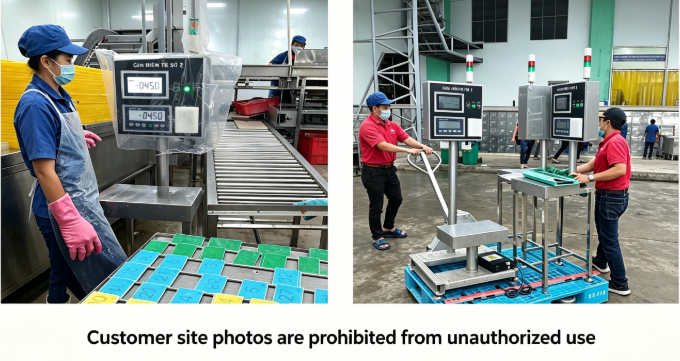
Mara: A real-world example ties it together: a weighing equipment manufacturer in Vietnam integrated the CESIPC 10-inch unit directly onto its checkweigher systems, relying on the SUS304 stainless steel housing and IP69K protection to handle frequent high-pressure cleaning without affecting system reliability.
Pip: Durable hardware in a hostile environment, running the data layer for an entire production line — that’s a different brief than most panel PC buyers are working from.
Pip: Food processing automation keeps raising the bar for what the operator interface has to survive, not just what it has to display.
Mara: And the hardware choices at the enclosure level are where that reliability either gets built in or doesn’t. More on where industrial computing goes next — next time.
Talk to a CESIPC Engineer
Our application engineers are ready to help you select the right configuration, discuss ODM requirements, or provide a tailored quotation for your project.
Typical response within 24 hours · Multilingual support · CE / FCC / BIS compliant


