
Pip: Industrial PCs rarely get the spotlight — the sensors and load cells take the bow while the panel PC quietly runs the whole show.
Mara: Today we’re looking at a piece from CESIPC-Summer on why a specific screen size has become the default choice for weight inspection systems — and what that tells us about how modern factory floors actually work.
Pip: Let’s start with the checkweigher and what’s driving that screen-size consensus.
Why 15.6 Inches Owns the Checkweigher Floor
Mara: The question the post is asking is deceptively simple: why has one screen size become the standard HMI for weight inspection systems across food, pharma, packaging, and logistics?
Pip: And the answer turns out to be less about the hardware spec and more about what operators actually have to look at all day — weight curves, reject counts, tolerance limits, recipe tables, all at once.
Mara: The post puts it directly: “A 15.6-inch industrial panel PC provides sufficient screen space to display critical information clearly without requiring multiple menu layers.”
Pip: So the upshot is that a smaller screen forces operators into sub-menus, which costs time and introduces errors — on a line that may be processing hundreds of packages a minute.
Mara: Right, and the post breaks this out across five practical reasons. Visibility for real-time weight data is the first. Recipe management is the second — production lines switch between products constantly, and a larger display makes it easier to verify settings and cut down on changeover mistakes.
Pip: The glove factor is the one I didn’t expect. Many of these environments — meat processing, pharma lines, chemical factories — require operators to wear gloves, and a 15.6-inch screen simply gives them bigger targets to tap.
Mara: The post also covers trend analysis: weight distribution, statistical process control, production yield. A screen that can render real-time weight curves and historical alarm logs lets supervisors catch process drift before it becomes a costly batch failure.
Pip: That’s the shift — from pass-fail weighing to continuous quality intelligence, and the display is what makes that readable by a human standing on the floor.
Mara: The fifth reason is Industry 4.0 connectivity. The post notes that today’s checkweigher panel PCs connect to MES systems, ERP platforms, SCADA, and cloud dashboards, so operators can view production KPIs directly on the machine without a separate terminal.
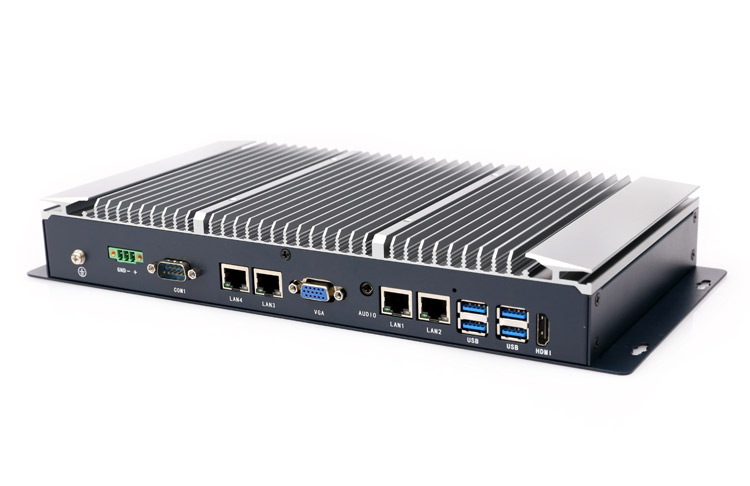
Pip: The specific product discussed is the EPC-W15X2A — fanless, front IP65, wide-range DC input, dual Gigabit Ethernet, six RS-232 ports, and processor options running up to 12th Gen Intel Core i7.
Mara: What that connectivity list signals is that the panel PC isn’t just an HMI anymore — it’s functioning as a data collection node and MES communication gateway at the same time.
Pip: The screen size question turns out to be a proxy for a bigger question about where intelligence lives in an automated line.
Mara: And that question only gets more pressing as factories push further into digital transformation.
Pip: Weight inspection used to mean a number on a dial. Now it means dashboards, SPC charts, and live MES feeds — all readable by someone in thick gloves.
Mara: The hardware is catching up to the ambition. More on how that plays out next time.
Talk to a CESIPC Engineer
Our application engineers are ready to help you select the right configuration, discuss ODM requirements, or provide a tailored quotation for your project.
Typical response within 24 hours · Multilingual support · CE / FCC / BIS compliant


We use your details only to answer this enquiry — no newsletters, no sharing. Drawings or a photo of the existing panel can be sent to sales@cesipc.com.