
Pip: Industrial PCs and shrimp processing — not a pairing you see on many tech blogs, but here we are, and it turns out the stakes are surprisingly high.
Mara: CESIPC1 has a detailed case study out on exactly that: how purpose-built washdown-rated hardware enabled full MES digitalization at a Vietnamese seafood facility. Let’s start with what that actually required on the factory floor.
How Washdown-Ready Hardware Unlocked Seafood MES
Pip: The core tension here is that Vietnam’s seafood export industry is growing fast — USD 3.7 billion in the first four months of 2026 alone — but the hardware sitting on those processing floors wasn’t keeping up. Software wasn’t the bottleneck. The machines running it were.
Mara: The post is direct about where the failure was happening. A shrimp export facility in Tien Giang Province kept losing conventional panel PCs to water ingress, connector oxidation, and corrosion-related shutdowns — replacement cycles averaging every three months. The case study frames it plainly: “the limitation was not MES software capability. It was the lack of industrial hardware capable of stable long-term operation in seafood-grade environmental conditions.”
Pip: So you’ve got a facility trying to run end-to-end digital traceability — raw material receiving through shipment batch validation — and the computers keep dying from the cleaning process meant to keep the food safe.
Mara: Right. The environment is genuinely brutal: daily high-pressure hot-water washdowns at 100 bar and 80 degrees Celsius, salt mist, cold-room condensation cycles, and operators working with wet hands or gloves. The CleanOps series was selected specifically because it’s rated IP69K plus IP67, uses full 304 stainless steel construction, and includes an anti-condensation pressure equalization valve to prevent internal fogging.
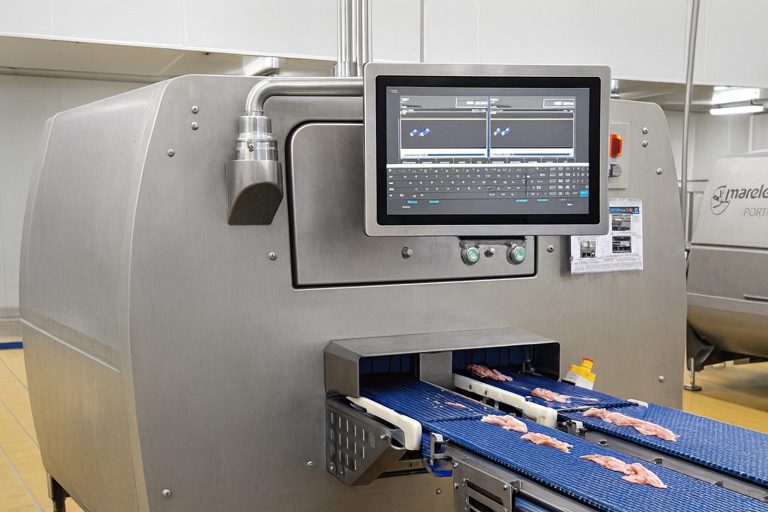
IP67 IP69K Stainless Steel Panel PC
Pip: That last detail is the one that gets overlooked — it’s not just about keeping water out during the wash, it’s about what happens when a unit moves between a cold room and a warm processing floor a dozen times a day.
Mara: The results after six months of deployment bear that out. Zero hardware failures across continuous operation and multiple daily washdown cycles. Compared to the previous three-month replacement average, uptime improved by over 200 percent, and maintenance costs dropped by approximately 65 percent.
Pip: And the traceability side — that’s where the compliance picture gets interesting.
Mara: Significantly. MES data completeness reached 99.9 percent, batch traceability lookup time fell from 40 minutes to under 60 seconds, and during two EU sanitary inspections the facility presented complete digital production records with no gaps. The post notes that previous non-conformance findings from incomplete manual records were fully eliminated.
Pip: Which means the hardware choice wasn’t just an uptime story — it was the thing standing between this facility and its export certifications.
Mara: The post closes on that point directly. Vietnam’s food manufacturers are accelerating toward AI-driven inspection and Industry 4.0 automation, but as the case study puts it, front-end environmental resilience is now the decisive last mile of digital transformation success.
Pip: Reliable hardware as the unglamorous foundation everything else depends on — that thread carries into whatever comes next for these facilities.
Mara: The through-line here is that digital transformation in physical industries stalls at the hardware layer. Software traceability is only as continuous as the machine collecting the data.
Pip: And in an environment where the sanitation process is also the thing that kills your computers, getting that layer right is the whole game. More from the site next time.
Talk to a CESIPC Engineer
Our application engineers are ready to help you select the right configuration, discuss ODM requirements, or provide a tailored quotation for your project.
Typical response within 24 hours · Multilingual support · CE / FCC / BIS compliant


We use your details only to answer this enquiry — no newsletters, no sharing. Drawings or a photo of the existing panel can be sent to sales@cesipc.com.