


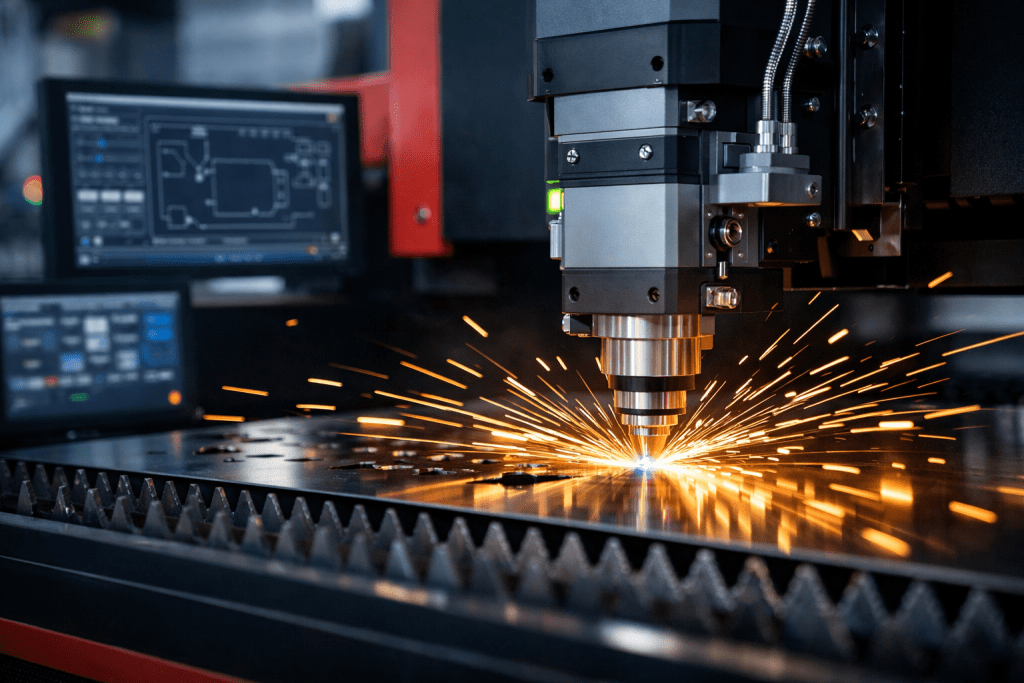
Fiber laser cutting machines are fast.
They are precise.
They are efficient on thin metals.
But in real factories, cutting quality is not decided by laser power alone.
It is decided by control stability, parameter consistency, environment resistance, and uptime.
This is where an industrial PC / HMI platform becomes a production-critical component.
Why Fiber Laser Cutting Machines Are Popular
Fiber laser cutting is widely used for sheet metal fabrication because it delivers:
- High cutting speed on thin and medium plates
- Narrow kerf and small heat-affected zone (HAZ)
- High repeat accuracy for batch production
- Easy integration with automation and smart factory systems
These advantages are real.
But they also create new operational pressure.
Feature 1: High Speed Cutting → Control Latency Becomes Visible
What happens in real production
Fiber laser machines accelerate and decelerate constantly.
Corners, small circles, and sharp angles are where problems appear.
Typical pain points
- HMI lag and screen freeze
- Motion control jitter and unstable path following
- Corner burn, overcut, burrs, and inconsistent edges
Industrial PC / HMI requirements
- Strong CPU performance for CNC + HMI workloads
- Stable real-time communication to motion control hardware
- Long-term stability under 24/7 load
How CESIPC fits (natural mention)
CESIPC industrial computing platforms are designed for continuous industrial runtime, with flexible I/O and expansion options for motion control integration.
Feature 2: High Precision → Small Delays Create Big Defects
Reality check
When kerf is narrow and HAZ is small, quality is more sensitive.
Tiny delays can show up as visible defects.
Typical pain points
- Deformed contours
- Poor repeatability across shifts
- Scrap increases even when the laser is “fine”
Industrial PC / HMI requirements
- Low-latency system response
- Robust industrial networking (multi-LAN)
- Strong EMI resistance for harsh shop-floor power and noise
Feature 3: Cutting Quality Depends on Parameter Recipes
Fiber cutting quality is heavily recipe-driven:
- focus position
- speed
- gas pressure and purity
- nozzle height
- power curves and pierce strategy
Typical pain points
- Recipe files are not standardized
- Operators rely on personal experience
- Parameter versions get mixed after maintenance or upgrades
- Quality changes from shift to shift
Industrial PC / HMI requirements
- Recipe management and version control
- Permission levels (operator vs engineer)
- Traceable logs for jobs and parameter changes
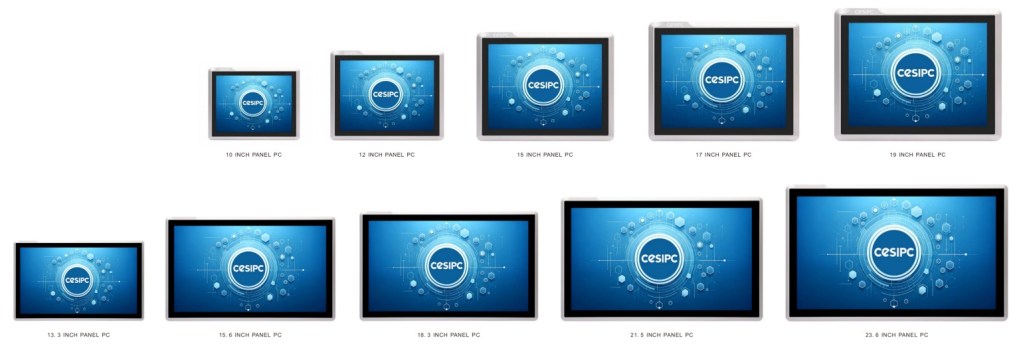

CESIPC angle
A stable industrial PC platform makes it easier to implement structured recipe workflows and reliable traceability for audits and repeat production.
Feature 4: Consumables + Alarms → Maintenance Needs Fast Diagnosis
Fiber laser machines consume:
- protective lens
- nozzle tips
- ceramic rings
- filters and gas-related components
Typical pain points
- Alarms are frequent and hard to interpret
- Troubleshooting takes too long
- Remote support is limited
- Downtime becomes the real “cost”
Industrial PC / HMI requirements
- Complete alarm logs and diagnostic history
- Easy export of maintenance records
- Remote maintenance capability (secure networking)
- Dual-network design for internal + external access separation
Feature 5: Smoke, Dust, Heat → The Shop Floor Destroys Consumer PCs
Laser cutting creates:
- metal dust
- smoke and fume
- thermal stress inside cabinets
Typical pain points
- Fan-clogging and overheating
- Random reboot or blue screens
- Connector corrosion and unstable ports
- Touch issues in oily or dusty environments
Industrial PC / HMI requirements
- Fanless design (preferred)
- Wide temperature tolerance
- Industrial-grade connectors and mounting
- Optional front IP-rated protection for HMI deployments
CESIPC mention
This is exactly why industrial PC vendors like CESIPC focus on fanless reliability, rugged construction, and long-life components for cutting lines.
Feature 6: Automation Integration → Expansion and Protocols Matter
Modern laser cutting lines often integrate:
- auto loading/unloading
- robotic arms
- tower storage systems
- MES/ERP/OEE data collection
Typical pain points
- Not enough ports
- Mixed protocols and integration complexity
- Data collection becomes an afterthought
- Upgrades require redesign
Industrial PC / HMI requirements
- Expandable I/O: LAN, USB, COM, GPIO, optional fieldbus
- Stable platform for protocol integration (Modbus, OPC UA, MQTT, etc.)
- Upgrade-friendly architecture to avoid full redesign
CESIPC angle
CESIPC’s modular hardware concept (BlockCore™) supports scalable builds and interface customization for different laser line configurations.
Feature 7: Power Instability → Data Corruption and Recovery Time
In many factories, voltage drops and sudden power cuts still happen.
Typical pain points
- system file corruption
- lost jobs and recipe data
- long recovery time
- production stops even after power is back
Industrial PC / HMI requirements
- power-loss protection strategy
- industrial SSD selection and endurance planning
- controlled shutdown or data safeguarding mechanism
What to Look for in an Industrial PC for Fiber Laser Cutting Machines
Use this checklist when selecting an IPC/HMI platform:
- High-performance CPU for CNC + HMI + motion workloads
- Stable industrial networking (multi-LAN, low jitter)
- Fanless reliability and wide temperature design
- I/O flexibility (COM, USB, LAN, optional GPIO/fieldbus)
- Traceability-ready logging and recipe control
- Remote maintenance support with secure networking
- Power-loss resilience to protect production data
Final Takeaway
Fiber laser cutting machines deliver speed and precision.
But the factory outcome depends on system stability.
A reliable industrial PC is not just a display controller.
It is part of your cutting quality, uptime, and automation roadmap.
If you are building or upgrading fiber laser cutting systems, CESIPC industrial computing platforms provide a scalable foundation for CNC control, HMI operation, and production data integration—built for harsh environments and long-term industrial runtime.
Contact CESIPC Team


We use your details only to answer this enquiry — no newsletters, no sharing. Drawings or a photo of the existing panel can be sent to sales@cesipc.com.