





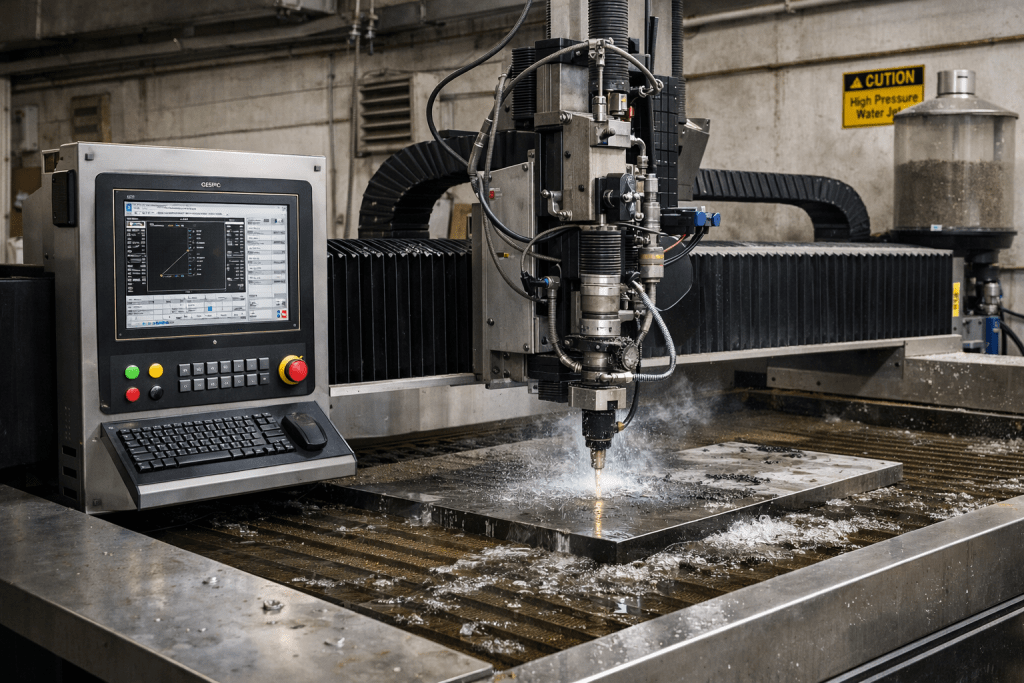
The Reality of Waterjet Cutting Environments
Waterjet cutting workshops are some of the harshest CNC environments:
- Constant water mist and splashing
- Abrasive particles mixed with water
- High-pressure pumps running continuously
- Long, uninterrupted cutting cycles
These conditions expose the weaknesses of standard control hardware very quickly.
Pain Point 1: High Humidity Causes Frequent Control Failures
What happens on the shop floor
Water mist and condensation gradually enter control cabinets.
Standard PCs suffer from:
- Oxidized connectors
- Unresponsive touch panels
- Corrosion on boards and cables
Impact on machine builders and users
- Unexpected downtime
- Difficult fault diagnosis
- High after-sales service costs
Pain Point 2: Abrasive Dust and Slurry Destroy Internal Components
What happens on the shop floor
Abrasive waterjet cutting uses garnet sand.
Dust mixed with moisture becomes aggressive slurry that:
- Clogs cooling fans
- Accelerates wear
- Shortens system lifespan
Impact on machine builders and users
- Frequent hardware replacement
- Unplanned maintenance stops
- Reduced machine reliability over time

Pain Point 3: High-Pressure Pumps Stress Electrical Systems
What happens on the shop floor
Waterjet pumps operate at extremely high pressure and draw significant power.
This leads to:
- Voltage fluctuations
- Electrical noise
- High startup and continuous load stress
Impact on machine builders and users
- System crashes during cutting
- Control software instability
- Scrapped material and production delays
How CESIPC industrial PCs help
- Industrial-grade motherboards
- Wide-range DC power input options
- Designed for long-term high-load operation
CESIPC focuses on electrical stability, not just CPU performance.
Pain Point 4: Cutting Quality Depends on Control Consistency, Not Peak Performance
What happens on the shop floor
Waterjet cutting is inherently slower than laser or plasma.
Precision depends on:
- Smooth motion interpolation
- Stable G-code execution
- Consistent trajectory control over time
Any system instability directly affects cut quality.
Impact on machine builders and users
- Inconsistent kerf width
- Poor edge quality
- Reduced repeatability
How CESIPC industrial PCs help
CESIPC industrial PCs provide:
- Stable CNC control execution
- Reliable HMI performance
- Long-term consistency without performance drift
In waterjet systems, consistency beats raw computing power.
Pain Point 5: 24/7 Operation with Limited Maintenance Access
What happens on the shop floor
Waterjet machines often operate in:
- Stone processing plants
- Heavy industrial workshops
- Remote or unmanned production areas
Maintenance access is limited.
Impact on machine builders and users
- Slow troubleshooting
- High downtime costs
- Pressure on after-sales teams
How CESIPC industrial PCs help
- Long-lifecycle product design
- Industrial reliability for continuous operation
- Standard interfaces for easy system integration and remote maintenance
CESIPC systems are built to run quietly in the background — not to be constantly serviced.
Why Industrial PCs Matter in Waterjet Cutting Systems
Waterjet cutting machines operate in conditions where office-grade PCs simply do not survive.
A reliable industrial PC is not an optional upgrade — it is a core component of system stability.
With over 16 years of experience in industrial computing, CESIPC provides industrial PC platforms designed specifically for harsh CNC environments, helping machine builders deliver:
- Higher uptime
- Lower maintenance costs
- More consistent cutting quality
CNC waterjet cutting machines push control systems to their limits through humidity, abrasive materials, electrical stress, and long duty cycles.
Choosing the right industrial PC directly determines:
- Machine reliability
- Production efficiency
- Long-term operating cost
CESIPC industrial PCs are engineered to meet these challenges — not in theory, but in real waterjet cutting environments.
Contact CESIPC Team


